
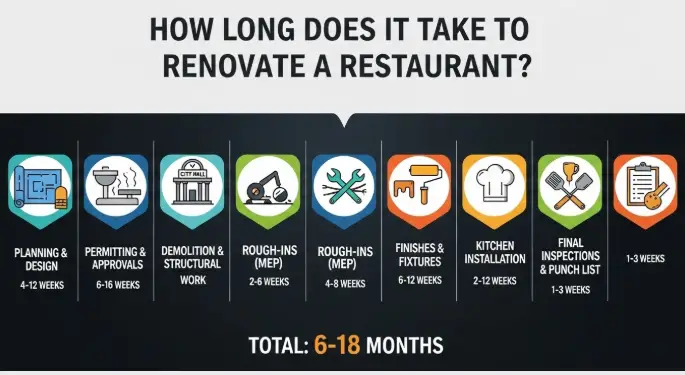
Renovating a restaurant is an exciting but complex undertaking. Whether you’re updating a small café or completely overhauling a large dining establishment, timing is a critical factor. Restaurant owners often ask HCS HOTEL CONSTRUCTION: how long does it take to renovate a restaurant? The answer depends on multiple variables, including the scope of the renovation, the size of the space, and regulatory requirements. In this guide, we’ll break down the timelines, step-by-step planning process, and everything you need to know to execute a restaurant renovation smoothly.
Short Answer: Average Restaurant Renovation Timeline
If you’re looking for a quick answer:
-
Minor renovations (paint, furniture updates, décor) typically take 2–6 weeks.
-
Moderate renovations (kitchen updates, layout changes) can take 6–12 weeks.
-
Major renovations (full overhaul, structural work) often take 3–6 months or longer.
Factors that can speed up or delay renovations include contractor availability, supply chain issues, permit approvals, and unexpected construction challenges.
Most restaurant renovations require careful planning and realistic expectations. Even minor projects can take longer than anticipated if preparation isn’t thorough.
Core Explanation of Restaurant Renovation Timeline
Factors That Affect Renovation Duration
Several factors determine how long it takes to renovate a restaurant:
-
Size of the Restaurant – Larger spaces take longer to renovate, especially if structural changes are involved.
-
Scope of Renovation – Cosmetic updates are quick, but a full overhaul including kitchen, dining area, and bathrooms requires significant time.
-
Permits and Legal Approvals – Obtaining permits for structural changes, plumbing, or electrical work can add weeks to your timeline.
-
Contractor Availability – Skilled contractors are in high demand; scheduling conflicts can delay projects.
-
Supply Chain & Materials – Delays in equipment, furniture, or custom fixtures can impact completion dates.
Understanding these factors upfront helps you set realistic expectations and avoid costly surprises.
Typical Renovation Phases
Most restaurant renovations follow these phases:
-
Planning and Design – Define your goals, create a budget, and work with designers.
-
Demolition and Preparation – Remove old fixtures, walls, and outdated equipment.
-
Construction and Installation – Structural changes, new flooring, electrical, plumbing, and HVAC upgrades.
-
Interior Design and Finishing Touches – Paint, lighting, furniture, décor, and any audio-visual installations.
-
Equipment Setup and Final Inspections – Install kitchen equipment, ensure compliance with safety codes, and conduct final inspections.
Realistic Timeline Ranges
-
Minor Renovations: 2–6 weeks. Examples include repainting, replacing furniture, and minor décor updates.
-
Moderate Renovations: 6–12 weeks. Often involves kitchen updates, partial layout changes, or new flooring.
-
Major Renovations: 3–6 months or longer. Full-scale projects include structural work, complete kitchen overhaul, and major aesthetic redesigns.
Example scenario: A 3,000 sq. ft. casual dining restaurant may take 10 weeks to renovate moderately, whereas a fine dining restaurant undergoing a full overhaul could require 5–6 months.
Common Questions People Also Ask
How long does it take to renovate a small restaurant?
Typically 2–8 weeks, depending on scope. Small cafés often complete minor updates faster due to limited space and simpler layouts.
How long does a full kitchen renovation take?
A full kitchen renovation can range from 4–12 weeks, factoring in electrical, plumbing, and commercial-grade equipment installation.
How much downtime should I expect during a renovation?
Downtime varies: minor updates may allow you to operate partially, while major renovations usually require complete closure.
Can renovations be done without closing the restaurant?
Partial renovations are possible, but scheduling and safety considerations often limit this approach.
How do permits impact the renovation timeline?
Permits can add 2–6 weeks or more, depending on your local jurisdiction. Early submission and pre-approval can help mitigate delays.
What delays are most common during restaurant renovations?
Unexpected structural issues, contractor scheduling conflicts, equipment delivery delays, and last-minute design changes are the most frequent.
Guide to Planning a Restaurant Renovation
Renovating a restaurant requires meticulous planning. Here’s a step-by-step approach:
Initial Planning and Budgeting
-
Set clear objectives: What do you want to achieve—modernization, efficiency, or complete transformation?
-
Define the renovation scope: Minor, moderate, or major.
-
Allocate your budget by area: kitchen, dining, décor, lighting, and contingency for unexpected expenses.
Design and Layout
-
Hire experienced designers or architects familiar with restaurant operations.
-
Optimize space for customer flow, staff efficiency, and regulatory compliance.
Permits and Approvals
-
Identify all local regulations and health codes.
-
Apply for permits early to prevent delays during construction.
Construction Phase
-
Conduct demolition carefully to avoid unnecessary damage.
-
Upgrade electrical systems, plumbing, and HVAC to meet current standards.
Interior Finishing
-
Install flooring, lighting, furniture, and décor.
-
Integrate audio-visual or smart systems if applicable.
Kitchen and Equipment Installation
-
Choose appliances that align with your menu and workflow.
-
Conduct safety checks and final commissioning.
Staff Training and Soft Opening
-
Test operations before the grand opening.
-
Train staff on new equipment and workflows to ensure smooth service.
Renovation Types and Timeline
| Renovation Type | Scope | Average Duration | Cost Range | Typical Impact on Operations |
|---|---|---|---|---|
| Minor Renovation | Cosmetic updates, paint, décor | 2–6 weeks | Low | Minimal downtime |
| Moderate Renovation | Kitchen updates, layout change | 6–12 weeks | Medium | Partial closure possible |
| Major Renovation | Full overhaul, structural work | 3–6 months+ | High | Complete closure likely |
This table helps owners quickly gauge how long it takes to renovate a restaurant depending on the project type and scope.
FAQs – How Long Does It Take to Renovate a Restaurant
-
How long does it take to renovate a restaurant kitchen?
Typically 4–12 weeks, depending on equipment, plumbing, and layout changes. -
Can I renovate while keeping the restaurant open?
Partial renovations are possible, but safety and efficiency often necessitate closures for larger projects. -
What is the fastest way to renovate a restaurant?
Pre-plan meticulously, hire experienced contractors, and order materials in advance to minimize delays. -
How do inspections affect the renovation timeline?
Inspections can add days or weeks if issues are identified; early compliance planning reduces risks. -
Do seasonal factors impact restaurant renovation?
Yes. Winter or holiday seasons may delay material deliveries and contractor availability. -
How do I prepare for unexpected delays?
Allocate 10–20% of your timeline as contingency and maintain flexibility in scheduling. -
Is it better to renovate in phases or all at once?
Phased renovations reduce downtime but may increase total duration; full renovations are faster but require temporary closure. -
How does contractor experience affect timeline?
Experienced contractors complete work more efficiently and anticipate challenges, reducing the likelihood of delays.
Conclusion
Renovating a restaurant is never a one-size-fits-all process. How long it takes to renovate a restaurant depends on the size, scope, regulatory approvals, and the efficiency of your planning and contractors. Minor cosmetic updates may be completed in weeks, while a major overhaul can span several months. Contact us or explore our services now!
Key takeaways:
-
Plan thoroughly and realistically.
-
Account for permits, inspections, and potential delays.
-
Consult professionals for accurate estimates.
-
Communicate clearly with staff and customers about timelines.
By following a structured, approach, restaurant owners can renovate efficiently, minimize downtime, and ultimately create a space that enhances both customer experience and operational efficiency.