One of the most frequent questions developers and business owners ask is: “What is the average cost per square foot for commercial construction in my area?” While a simple number is tempting, the reality is that high-quality construction costs are influenced by a complex matrix of local labor rates, material volatility, and specific asset requirements. In the Northeast’s competitive markets from New York City to Boston precision in estimating is the difference between a successful ROI and a budgetary failure.
At HCS, we provide transparent, data-driven cost estimation that helps you move from “ballpark figures” to a “Guaranteed Maximum Price” (GMP).
-
The Core Drivers of Square Foot Pricing
A “standard” square foot price doesn’t exist; it is built on several critical variables:
- Asset Class & Complexity: A mission-critical data center or a luxury medical suite will command a significantly higher cost per square foot than a “shell” warehouse or a basic retail fit-out.
- Geographic Labor Rates: Union versus non-union labor costs vary drastically by zip code, particularly in high-density urban hubs in the Northeast.
- Building Height and Structural Shell: High-rise construction requires specialized logistics, vertical transportation, and reinforced structural integrity, all of which drive up the per-foot cost compared to single-story developments.
-
Breaking Down the Costs: Hard vs. Soft Costs
To accurately estimate your project, you must look beyond just the “sticks and bricks.”
- Hard Costs: These include the physical construction—site work, masonry, MEP systems (Mechanical, Electrical, Plumbing), and interior finishes.
- Soft Costs: Often overlooked, these include architectural and engineering fees, legal permits, land surveys, and insurance.
- Site Conditions: Brownfield redevelopment or urban infill projects often involve hidden costs like environmental remediation or complex utility tap-ins.
-
Current Northeast Market Benchmarks (2026)
While costs fluctuate, current benchmarks for professional-grade construction in the Northeast provide a baseline:
- Corporate Interiors/Office Fit-outs: Focuses on high-end glass, lighting, and data infrastructure.
- Luxury Hospitality & Hotels: Driven by premium finishes, soundproofing, and complex plumbing requirements.
- Healthcare & Life Sciences: High costs due to specialized ventilation (HEPA), medical gas lines, and cleanroom standards.
- Retail Shell & Core: Generally lower on the interior side but requires high investment in facade and curb appeal.
-
How to Navigate Material Volatility
In 2026, the global supply chain still presents challenges. HCS helps owners mitigate these risks through:
- Early Procurement: Securing long-lead items (like HVAC units or custom steel) early in the design phase to lock in pricing.
- Value Engineering: Identifying alternative materials that meet the performance and aesthetic requirements of the zip code’s market while reducing costs.
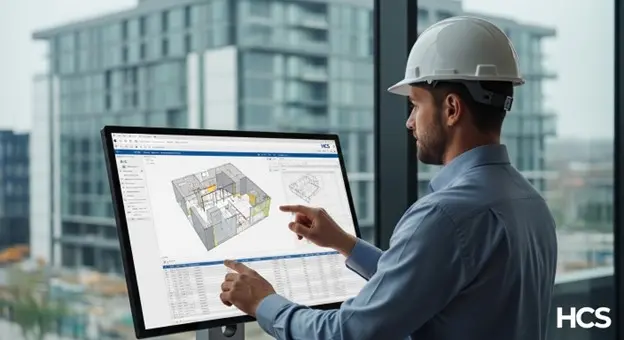
- Pre-Construction Services: Utilizing detailed BIM (Building Information Modeling) to identify “clashes” before construction starts, preventing expensive change orders.
-
Get a Localized, Project-Specific Estimate
A general online calculator cannot account for the specific zoning laws of your zip code or the unique structural needs of your building. For a truly accurate estimate, you need a contractor who understands the local subcontractor market and regulatory landscape.