
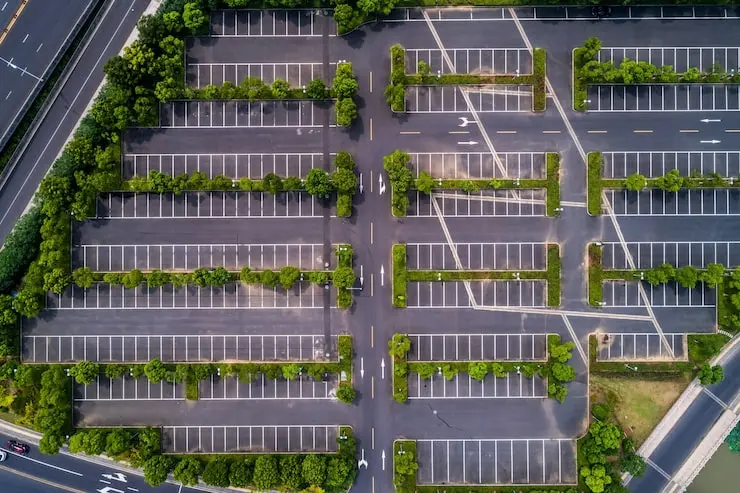
Why Parking Lot Upgrades Matter
A parking lot is the first physical element of a commercial property that customers, guests, or tenants interact with. Its condition communicates something about the property before anyone enters the building. Cracked pavement, faded markings, and poor lighting create a negative impression that affects how people perceive the business inside. Beyond appearance, a deteriorating parking lot creates safety risks that carry liability exposure for property owners. Upgrades to pavement, drainage, lighting, and layout protect the asset, reduce liability, and improve the experience of everyone who uses the property. Owners who defer parking lot maintenance consistently pay more in the long run through emergency repairs, liability claims, and property value erosion than those who invest on a planned schedule.
Signs Your Parking Lot Needs Upgrading
Visible cracking across the pavement surface indicates that the base layer is compromised and that surface patching will provide only short-term results. Potholes represent a more advanced stage of the same deterioration and create liability risk from vehicle damage and personal injury. Standing water after rain events indicates drainage failure, which accelerates pavement deterioration and creates slip hazards in pedestrian areas. Faded striping makes it difficult for drivers to identify spaces, travel lanes, and accessible parking areas, increasing the risk of accidents and ADA compliance violations. Properties showing multiple signs across these categories should evaluate full resurfacing or replacement rather than continuing a cycle of patch repairs that does not address the underlying condition.
Types of Parking Lot Upgrades
Resurfacing
Resurfacing involves applying a new layer of asphalt over the existing pavement. It is appropriate when the base is structurally sound but the surface has deteriorated through age and traffic wear. Resurfacing restores appearance, reestablishes a consistent driving surface, and extends pavement life by 10 to 15 years at a fraction of the cost of full replacement. It is the most common upgrade path for commercial properties where the base layer is still performing.
Full Replacement
Full replacement is required when the base layer has failed and resurfacing would not address the underlying structural problem. This involves removing existing pavement, repairing or replacing the base, and installing new asphalt or concrete from the ground up. Full replacement carries significantly higher cost but produces a longer-lasting result and eliminates the recurring maintenance cost associated with a compromised base.
Striping & Layout Redesign
Restriping can be completed independently of pavement work or as part of a larger upgrade project. Layout redesign during a restripe can increase the number of usable parking spaces, improve traffic flow through the lot, and bring the property into ADA compliance without requiring any pavement work. For properties where the pavement is in acceptable condition but the layout is inefficient or non-compliant, restriping alone delivers measurable improvement at low cost.
Lighting Upgrades
Parking lot lighting upgrades from older metal halide or high-pressure sodium fixtures to LED systems reduce energy consumption, improve light distribution across the lot, and extend the lifespan of the lighting infrastructure. Lighting is a safety and security investment that simultaneously reduces operating cost over the life of the installation.
Asphalt vs Concrete
Asphalt has a lower upfront cost, typically 30% to 50% less per square foot than concrete, and is faster to install and repair. It requires more frequent maintenance including sealing and periodic resurfacing, but individual repairs are straightforward and accessible for most commercial property budgets. Concrete carries a higher upfront cost but delivers a longer service life and lower maintenance requirement over time. It performs better in climates with sustained high heat that softens asphalt and causes rutting under heavy traffic. For most commercial parking lot applications, asphalt is the standard choice based on its cost and repairability. Concrete is appropriate for high-traffic areas, loading zones, fire lanes, and properties in climates where asphalt performance is a documented concern.
Cost Breakdown
Resurfacing Cost
Asphalt resurfacing runs from $1.50 to $3.00 per square foot depending on pavement thickness, site conditions, and regional labor rates. A 20,000-square-foot parking lot will cost approximately $30,000 to $60,000 to resurface. The range reflects variation in existing pavement condition and the extent of surface preparation required before the new layer is applied.
Full Replacement Cost
Full asphalt replacement ranges from $3.00 to $7.00 per square foot. Concrete replacement runs $5.00 to $12.00 per square foot. Excavation, base repair, and material hauling are the primary cost variables in both cases, and properties with significant base failure fall toward the upper end of these ranges.
Lighting & Drainage Cost
LED lighting upgrades for a standard commercial parking lot run $15,000 to $50,000 depending on fixture count and electrical infrastructure requirements. Drainage improvements including catch basin repair, regrading, and inlet installation range from $5,000 to $30,000 based on the scope of the drainage failure and the extent of regrading required.
Drainage & Safety Improvements
Drainage failures in parking lots create problems that extend beyond pavement deterioration. Standing water in pedestrian crossing areas creates slip hazards that generate liability exposure. Water pooling near building entrances accelerates damage to foundation perimeter areas and waterproofing systems. Regrading during resurfacing or full replacement corrects drainage issues at the surface level, directing water toward catch basins and away from building foundations. Catch basins and inlet structures that are cracked, blocked, or settled require repair or replacement to restore proper water flow through the lot’s drainage system. Slip-resistant surface treatments in pedestrian crossing areas and at building entrance approaches reduce injury risk and the liability claims that follow.
Lighting & Security
LED parking lot lighting reduces energy cost relative to older fixture types and delivers more consistent light distribution across the driving surface and pedestrian areas. Improved visibility supports safety and security for guests, customers, and employees using the lot during evening hours. Camera systems paired with lighting upgrades extend the effectiveness of both investments by ensuring that surveillance coverage aligns with lit areas. Lighting and camera placement should be coordinated during the planning phase of any parking upgrade to avoid coverage gaps that undermine the security value of either system.
ADA Compliance
ADA-compliant parking requires a minimum number of accessible spaces based on total lot size, with van-accessible spaces included in the count at specified ratios. Accessible spaces must be positioned on the shortest accessible route to the building entrance, have the required dimensions for space width and adjacent access aisle, and connect to the building by an accessible path that avoids crossing active traffic lanes wherever possible. Surface slope within accessible spaces and access aisles must meet ADA grade requirements that are more restrictive than general pavement standards. Properties that have not reviewed ADA compliance during previous upgrades frequently find that their current layout does not meet current standards. Addressing compliance during a resurfacing or replacement project costs far less than returning to the lot for a dedicated compliance correction after the paving is complete.
EV Charging Integration
Parking lot upgrade projects are the right time to install conduit for future EV charging stations. Running conduit during active paving work adds minimal cost compared to trenching through finished pavement at a later date. Properties that have not yet committed to charger installation can run conduit to planned charger locations and install pull boxes without purchasing equipment, establishing the infrastructure needed to add chargers when demand or capital budget supports the next step. Coordinating EV conduit installation with a parking lot upgrade is the most cost-effective path to future-ready EV infrastructure.
ROI & Business Impact
A parking lot in good condition reduces liability exposure from vehicle damage claims and personal injury incidents. Properties with well-maintained, clearly marked, and adequately lit parking report fewer incidents and lower insurance costs over time. Customer and guest satisfaction is given shape by the parking experience, and properties with deteriorating lots see that reflected in reviews and repeat visit rates. From an asset value standpoint, a parking lot in poor condition is a line-item deduction in property appraisals and a negotiating point in sale and refinancing transactions. Upgrade investment is recovered through liability reduction, operating cost savings from LED lighting, EV infrastructure readiness, and long-term protection of the property’s overall asset value.