
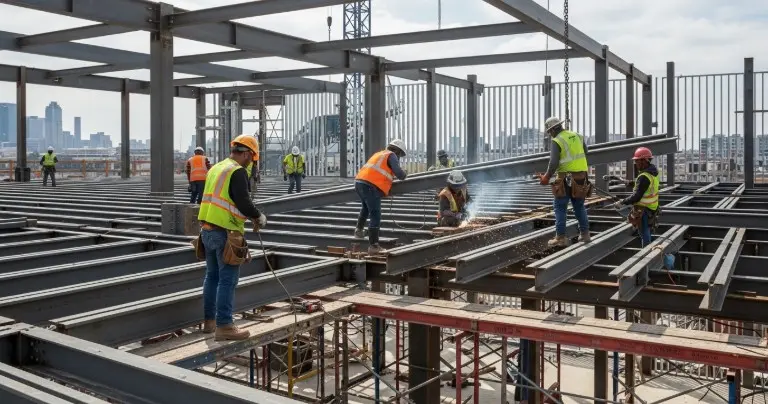
Introduction: Why Joists Matter in Hotel Development
In hotel construction, structural efficiency isn’t just an engineering concern, it’s a direct driver of cost, speed, and long-term profitability. Whether you’re developing a budget roadside hotel or a luxury high-rise property, the structural system you choose determines how quickly you build, how well the building performs, and how guests ultimately experience the space.
One of the most critical, but often overlooked, elements in this system is the joist. From supporting guest room floors to enabling modern open-plan lobby designs, joists play a foundational role in the hospitality construction process.
For developers and investors, understanding joists is not just technical knowledge, it’s a strategic advantage.
Quick Answer: What is a Joist in Construction? (For Hotel Developers & Investors)
A joist is a horizontal structural element used to support floors, ceilings, or roofs by transferring loads to beams, walls, or columns.
In hotel construction, joists:
- Support guest room floors and ceilings
- Distribute structural loads efficiently
- Enable scalable, repetitive hotel layouts
- Improve construction speed and cost control
They are essential for achieving structural stability, efficient hotel building design, and long-term durability.
What is a Joist in Construction? Role Explained in Hotel Development Projects
What is a Joist in Construction? Key Structural Concept in Hospitality Buildings
Joists are load-bearing members that span between beams or load-bearing walls. Their primary function is to support floor and ceiling systems while transferring loads across the structural framework.
In hotel architecture planning, joists enable:
- Standardized room layouts across multiple floors
- Efficient corridor and hallway structures
- Balanced load distribution in multi-story buildings
They essentially form the skeleton that supports daily hotel operations, from guest movement to furniture loads.
Why Joists Are Critical in Hotel Construction & Hospitality Infrastructure
Hotels demand structural consistency due to repetitive room layouts and high occupancy loads. Joists ensure:
- Uniform load distribution across guest rooms
- Structural safety in multi-story buildings
- Compatibility with modular hotel construction systems
- Reduced material waste in commercial construction for hotels
Without properly designed joists, floors may sag, vibrate, or fail, leading to costly repairs and poor guest experience.
Scope of Joist Applications in Hotel Construction Projects
Joists are used across multiple hotel areas:
- Guest room floor systems
- Corridors and hallways
- Ceiling framing systems
- Roof support structures
- Conference halls (with engineered joists)
- Modular hotel construction units
Their versatility makes them essential in both traditional and modern hospitality construction methods.
Key Factors Hotel Owners Must Understand About Joists
Cost Impact of Joists in Hotel Construction
Joist selection directly affects hotel construction cost:
- Timber joists → lower upfront cost
- Steel joists → higher strength, higher cost
- Engineered joists → optimized performance and reduced waste
A poorly designed joist system can lead to expensive structural corrections later.
Influence on Hotel Development Timeline
- Prefabricated joists accelerate construction
- Modular joist systems reduce on-site labor
- Delays in joist installation can stall flooring and finishing
Efficient joist planning helps maintain the hotel development timeline.
Design & Architectural Flexibility
Joists allow:
- Open-plan lobby concepts
- Flexible room configurations
- Integration with HVAC, electrical, and plumbing systems
This is especially critical in luxury hotel building design.
Sustainability & Structural Efficiency
- Engineered wood joists reduce material waste
- Lightweight systems lower foundation loads
- Supports LEED-focused construction strategies
People Also Ask (Hotel Construction Perspective)
What is the purpose of a joist in construction projects?
To support floors and ceilings while distributing loads safely across the building structure.
What materials are used for joists in hotels?
Common materials include timber, steel, reinforced concrete, and engineered wood.
Are joists used in concrete hotel buildings?
Yes, especially in hybrid systems or as part of slab support structures.
How far can joists span in hotel construction?
Span depends on material and design but typically ranges from 10 to 40 feet.
Are joists important in modular hotel construction?
Yes, they are critical for prefabricated structural modules and efficiency.
How Joists Are Used in Hotel Construction Projects
Step 1: Structural Design & Load Calculation
Engineers calculate:
- Dead loads (structure weight)
- Live loads (guests, furniture, equipment)
- Span and spacing requirements
Step 2: Material Selection
Based on:
- Hotel type (budget vs luxury)
- Structural needs
- Budget constraints
Step 3: Fabrication or Prefabrication
- Manufactured off-site for modular hotel construction
- Quality-controlled before delivery
Step 4: Installation On-Site
- Joists are placed between beams or walls
- Alignment and spacing are critical
Step 5: Integration with Flooring & MEP Systems
- Floor decking installed
- Electrical, plumbing, and HVAC systems integrated
Comparison: Types of Joists in Hotel Construction
| Type | Material | Strength | Cost | Best Use in Hotels |
|---|---|---|---|---|
| Wood Joists | Timber | Medium | Low | Budget hotels |
| Steel Joists | Steel | High | Medium-High | Mid/high-rise hotels |
| Concrete Joists | Reinforced concrete | Very High | High | Large structures |
| Engineered Joists | Composite wood | High | Medium | Modular hotel construction |
Cost Breakdown: Joists in Hotel Construction Budgets
Direct Material Costs
- Timber, steel, or concrete joists
- Fasteners and connectors
Installation Costs
- Labor for placement
- Equipment for lifting (steel joists)
Indirect Cost Impact
- Poor design → floor vibration issues
- Misalignment → rework costs
- Delays → impact on finishing stages
Cost Variation by Hotel Type
- Budget hotels → basic joist systems
- Luxury hotels → high-performance joists
- High-rise hotels → reinforced concrete systems
Regulations, Permits & Compliance for Joists
Building Code Compliance
- Load-bearing capacity must meet standards
- Fire resistance ratings required
Structural Engineering Standards
- Deflection limits
- Vibration control requirements
Safety & Hospitality Standards
- Noise reduction for guest comfort
- Fire-rated assemblies for safety
Common Mistakes Hotel Developers Make with Joists
- Choosing incorrect joist type for load conditions
- Ignoring vibration and acoustic performance
- Poor coordination with MEP systems
- Underestimating span and spacing
- Using low-quality materials to cut costs
These mistakes can lead to structural issues, delays, and long-term maintenance costs.
Hotel Construction Considerations Influenced by Joists
Site Selection & Structural Requirements
Soil and seismic conditions influence joist design and spacing.
Design Strategy (Luxury vs Budget Hotels)
- Luxury → higher acoustic and structural standards
- Budget → cost-efficient structural systems
Construction Methods (Modular vs Traditional)
- Modular → heavy reliance on engineered joists
- Traditional → more on-site installation flexibility
Sustainability & Green Building Practices
Efficient joists reduce waste and carbon footprint.
Operational Efficiency Post-Construction
Well-designed joists reduce maintenance and structural issues over time.
FAQs About Joists in Construction
What is a joist in construction and why is it important for hotels?
It is a structural element that supports floors and ceilings, ensuring safety and durability in hotel buildings.
What materials are best for joists in hotel construction?
Steel and engineered wood are preferred for performance and durability.
Can joists be used in high-rise hotel buildings?
Yes, especially steel and concrete joists.
How do joists affect hotel construction cost?
Material choice and design directly impact cost and efficiency.
Are joists used in modular hotel construction?
Yes, they are essential for prefabricated systems.
What happens if joists are improperly installed?
It can lead to sagging floors, vibration issues, and structural risks.
How far can joists span in hotel buildings?
Depends on material and design, typically 10–40 feet.
Do joists impact guest comfort in hotels?
Yes, poor joist design can cause noise and vibration issues.
Conclusion: The Strategic Role of Joists in Hotel Construction Success
Joists are not just structural components, they are a critical driver of performance in hotel construction. From supporting floors to enabling efficient layouts, they directly influence:
- Structural safety
- Construction speed
- Hotel construction cost
- Guest experience
For developers and investors, selecting the right joist system is a strategic decision. Done right, it reduces risk, accelerates timelines, and enhances long-term asset value, making it a cornerstone of successful hospitality infrastructure development.