Introduction: Why EIFS Matters in Modern Hotel Development
In today’s competitive hospitality market, the exterior of a hotel is more than just aesthetics, it’s a strategic asset. The façade directly impacts guest perception, energy efficiency, long-term maintenance costs, and overall ROI. For hotel developers and investors, choosing the right exterior system is a decision that influences both construction performance and operational profitability.
One system that has become increasingly popular in commercial construction for hotels is EIFS. Whether you’re developing a mid-scale urban hotel or a luxury resort, understanding EIFS can help you optimize your hotel construction cost, accelerate your timeline, and enhance design flexibility.
Quick Answer: What is EIFS in Construction? (For Hotel Developers & Investors)
EIFS stands for Exterior Insulation and Finish System. It is a multi-layered exterior wall system used for insulation, weather protection, and decorative finishes.
In hotel construction, EIFS is widely used for façades because it:
- Improves energy efficiency and reduces HVAC costs
- Provides flexible, modern architectural finishes
- Reduces structural load compared to brick or concrete
- Supports faster construction timelines
It plays a critical role in hotel building design, sustainability, and long-term operational efficiency.
What is EIFS in Construction? Role Explained in Hotel Development Projects
What is EIFS in Construction? Key Façade System in Hospitality Projects
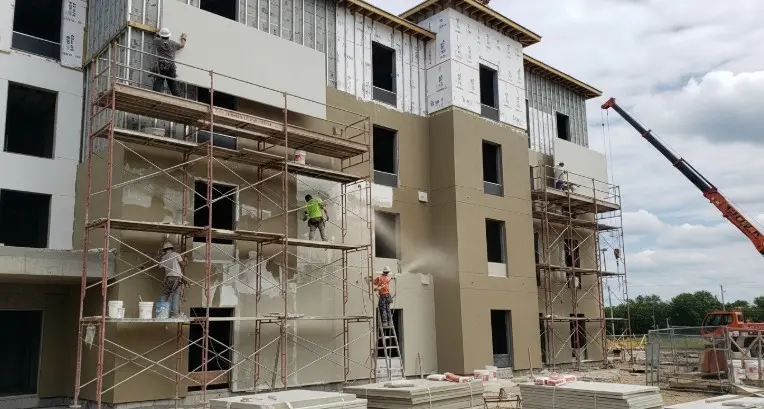
EIFS is a lightweight cladding system applied to the exterior of buildings. It typically includes:
- Insulation board (usually expanded polystyrene)
- Base coat with embedded fiberglass mesh
- Finish coat for texture and color
Unlike traditional systems, EIFS acts as both insulation and exterior finish, making it highly efficient for hotel architecture planning.
Why EIFS Is Critical in Hotel Construction & Hospitality Infrastructure
Hotels require a balance of performance and aesthetics. EIFS delivers both:
- High thermal insulation reduces energy consumption
- Lightweight structure lowers foundation and framing loads
- Flexible design allows custom textures, shapes, and finishes
- Improved indoor comfort enhances guest experience
In real-world hospitality projects, EIFS is often used in branded hotels where façade identity is critical to market positioning.
Scope of EIFS Applications in Hotel Construction Projects
EIFS is used across multiple areas in hotel developments:
- Exterior façades (primary application)
- Decorative elements like columns and trims
- Guest room exterior walls
- Renovation of older hotels to modern standards
- Modular hotel construction panels
- Resort and beachfront hotel finishes
For example, a mid-rise hotel renovation project can use EIFS to upgrade both insulation and visual appeal without significantly increasing structural load.
Key Factors Hotel Owners Must Understand About EIFS
Cost Impact of EIFS in Hotel Construction
EIFS can significantly influence hotel construction cost:
- Lower structural load reduces foundation costs
- Faster installation reduces labor expenses
- Energy savings lower long-term operational costs
However, poor installation can lead to moisture issues, increasing maintenance costs.
Influence on Hotel Development Timeline
- EIFS installs faster than brick or stone
- Prefabricated panels accelerate project delivery
- Weather conditions can affect application timing
Developers often use EIFS to compress the hotel development timeline and reach opening sooner.
Design & Architectural Flexibility
EIFS enables:
- Complex façade designs
- Custom textures and finishes
- Brand-specific hotel aesthetics
Luxury hotels, in particular, rely on EIFS for visually distinctive exteriors.
Sustainability & Energy Efficiency
- High insulation performance reduces energy use
- Supports LEED certification goals
- Reduces HVAC system load
This makes EIFS a strong choice for green hotel construction projects.
People Also Ask (Hotel Construction Perspective)
What is the purpose of EIFS in construction projects?
To provide insulation, weather protection, and aesthetic finishes in a single system.
Is EIFS good for hotel buildings?
Yes, especially for energy efficiency and modern façade design.
What are the advantages of EIFS over brick or stucco?
EIFS offers better insulation, lighter weight, and greater design flexibility.
Does EIFS improve energy efficiency in hotels?
Yes, significantly by reducing heat transfer through walls.
Can EIFS be used in modular hotel construction?
Yes, it is commonly used in prefabricated façade panels.
How EIFS Is Used in Hotel Construction Projects
Step 1: Wall Substrate Preparation
- Structural wall (concrete or sheathing) is prepared
- Moisture barrier is installed
Step 2: Insulation Board Installation
- Foam insulation boards are attached
- Provides thermal resistance
Step 3: Base Coat & Reinforcement Mesh
- Base coat applied over insulation
- Fiberglass mesh embedded for durability
Step 4: Finish Coat Application
- Decorative finish applied
- Defines texture, color, and final appearance
Step 5: Inspection & Quality Control
- Check for cracks, moisture sealing, and uniformity
- Ensure compliance with building standards
Comparison: EIFS vs Other Exterior Systems in Hotel Construction
| System | Material | Cost | Insulation | Design Flexibility | Best Use in Hotels |
|---|---|---|---|---|---|
| EIFS | Foam + coatings | Medium | High | Very High | Modern façades |
| Brick Veneer | Clay brick | High | Medium | Low | Traditional hotels |
| Stucco | Cement plaster | Medium | Low-Medium | Medium | Budget hotels |
| Curtain Wall | Glass + aluminum | Very High | Low | Very High | Luxury high-rise |
Cost Breakdown: EIFS in Hotel Construction Budgets
Direct Cost Components
- Insulation boards
- Base coat and mesh
- Finish materials
- Labor and installation
Indirect Cost Benefits
- Lower foundation costs due to reduced weight
- Energy savings over time
- Faster project completion
Cost Variations by Hotel Type
- Budget hotels → simple EIFS systems
- Luxury hotels → custom finishes and detailing
- Resorts → weather-resistant systems
Impact of Construction Methods (Modular vs Traditional)
- Modular hotel construction → reduced labor, faster installation
- Traditional construction → more on-site work
Regulations, Permits & Compliance for EIFS
Building Code Compliance
- Must meet fire safety and insulation standards
- Structural integration required
Weatherproofing & Moisture Management
- Drainage systems essential
- Improper installation leads to water damage
Environmental & Sustainability Regulations
- Supports energy efficiency compliance
- Contributes to LEED certification
Common Mistakes Hotel Developers Make with EIFS
- Poor moisture barrier installation
- Hiring inexperienced contractors
- Ignoring long-term maintenance planning
- Using low-quality materials
- Failing to integrate EIFS with overall façade design
These mistakes can lead to expensive repairs and reduced building lifespan.
ROI & Investment Insights: Why EIFS Matters in Hotel Profitability
Energy Savings = Long-Term ROI
Reduced heating and cooling costs directly improve profit margins.
Faster Construction = Faster Revenue
Quicker project completion leads to earlier hotel opening and revenue generation.
Enhanced Aesthetic Appeal
Modern façades increase brand value, bookings, and guest satisfaction.
Hotel Construction Considerations Influenced by EIFS
Site Selection & Climate Conditions
- Suitable for most climates with proper detailing
- High-moisture areas require advanced systems
Design Strategy (Luxury vs Budget Hotels)
- Luxury → custom, high-end finishes
- Budget → cost-efficient designs
Construction Methods (Modular vs Traditional)
- Modular → prefabricated EIFS panels
- Traditional → on-site application
Sustainability & Green Building Practices
- Supports eco-friendly construction
- Improves energy performance
Operational Efficiency Post-Construction
- Lower energy consumption
- Easier façade maintenance
FAQs About EIFS in Hotel Construction
What is EIFS in construction and why is it important for hotels?
EIFS is an exterior wall system that improves insulation, design flexibility, and energy efficiency.
Is EIFS better than brick for hotel buildings?
It depends—EIFS is lighter and more efficient, while brick offers durability and traditional aesthetics.
How does EIFS affect hotel construction cost?
It reduces structural and operational costs but requires proper installation.
Is EIFS durable for long-term hotel use?
Yes, when properly installed and maintained.
Can EIFS be used in high-rise hotel construction?
Yes, especially in combination with other façade systems.
Does EIFS require maintenance?
Yes, periodic inspection and repair are necessary.
Is EIFS suitable for modular hotel construction?
Yes, it is widely used in prefabricated panels.
What are the risks of improper EIFS installation?
Moisture intrusion, cracks, and long-term structural damage.
Conclusion: The Strategic Role of EIFS in Hotel Construction Success
EIFS has become a cornerstone of modern hotel construction due to its ability to combine performance, aesthetics, and efficiency. For developers and investors, it offers:
- Reduced hotel construction cost over time
- Faster project delivery
- Enhanced building performance
- Improved guest experience
However, its success depends heavily on proper design, installation, and maintenance. When executed correctly, EIFS is not just a façade system—it’s a strategic investment that drives long-term profitability in hospitality projects.