
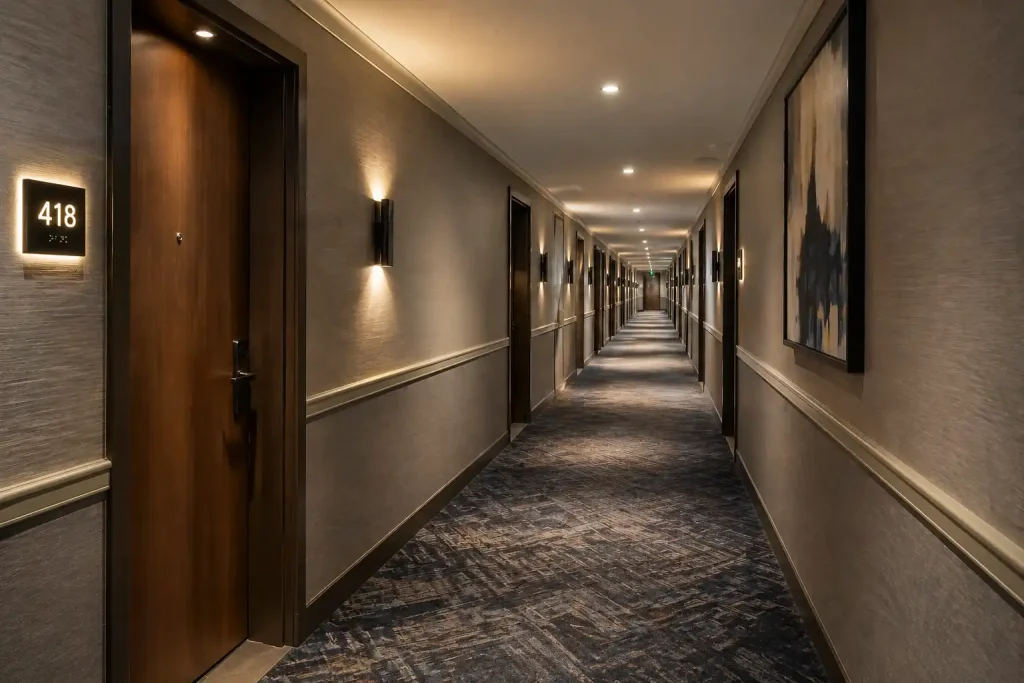
Guests rarely remember a great hotel corridor. They always remember a bad one. Stained carpet, flickering lights, confusing room numbers, the smell of old hallway runners. Corridors are the connective tissue of every hotel, and they signal property quality within seconds of guests walking from the lobby toward their rooms. Despite that, corridors are typically the last thing renovated and the first thing cut from budgets when costs run over. That sequencing is a mistake. Corridor renovations deliver disproportionate guest experience impact for relatively modest investment, and the brand inspectors who evaluate properties on a four-year cycle pay closer attention to corridor condition than most owners realize.
Why Corridors Matter More Than Most Owners Realize
The corridor experience shapes guest perception in three distinct moments. The first comes immediately after check-in, when guests walk from the elevator to their room carrying luggage and forming early impressions about whether the property delivers on its rate. The second comes daily during the stay, when guests pass through the corridor multiple times and absorb the cumulative effect of finishes, lighting, and cleanliness. The third comes at checkout, when corridor condition reinforces or undermines the value perception that drives review scores and repeat visits.
Review platforms make corridor problems visible at a level most owners do not track until ratings start declining. Mentions of dim hallway lighting, dated carpet, scuff-marked walls, and confusing room numbers appear in a meaningful percentage of negative reviews on properties with deferred corridor maintenance. The financial impact compounds because corridor issues affect every guest, not just those staying in dated rooms. The relationship between visual quality and revenue, captured in detail in the analysis of how hotel design impacts guest experience and revenue, applies with extra force in corridors because of the universal exposure every guest receives.
Carpet Selection for Hotel Corridors
Carpet drives the largest single line item in corridor renovation budgets, and the choices made during selection shape both initial cost and lifespan. Three categories of decision matter most: construction type, pattern strategy, and underlayment specification.
Carpet Construction Types
Broadloom carpet, the traditional roll-installed product, has dominated hotel corridors for decades. It produces a continuous appearance with no visible seams in well-installed projects and provides good acoustic dampening. Carpet tile, which arrives in eighteen-inch or twenty-four-inch squares, has gained share rapidly in hospitality applications because of its operational advantages. Damaged sections can be replaced individually rather than requiring full corridor recarpeting. Installation produces less waste. Acoustic performance with proper underlayment matches or exceeds broadloom in most applications.
Fiber selection matters more than most owners track during procurement. Solution-dyed nylon, which has color built into the fiber rather than applied to the surface, holds color through cleaning and UV exposure for two to three times longer than conventional dyed nylon. Polyester carpet costs less initially but typically lasts thirty to fifty percent fewer cycles in high-traffic hospitality use, which means owners often pay more in lifecycle terms despite the lower upfront cost. Density and pile height standards specifically engineered for hospitality use produce meaningfully better wear performance than residential or general commercial products.
Pattern and Color Strategy
Patterned carpet hides wear and soiling far better than solid colors, which is why hospitality designers consistently specify medium-to-high pattern density for corridors. The pattern breaks up the visual signature of foot traffic, spills, and wear paths that show clearly on solid carpet within months of installation. Brand standards constrain pattern choices for franchised properties, with each brand publishing approved carpet collections that align with their design intent. Independent and boutique properties have wider selection latitude but face the same wear-pattern realities that drive branded selection toward the patterns that perform.
Cost Per Square Foot Ranges
Standard hospitality carpet pricing runs four dollars fifty cents to eight dollars per square foot installed for branded soft goods refresh projects. Premium custom carpet, used at upscale and luxury properties, runs ten to eighteen dollars per square foot installed. Carpet tile pricing typically falls within the same ranges as broadloom for the carpet itself, with installation labor running slightly lower because of the simpler installation process. The five-day soft goods refresh framework applies particularly well to corridor carpet replacement because the work can be sequenced in tight windows that minimize guest disruption.
Underlayment That Affects Lifespan
Padding extends carpet life by thirty to fifty percent in hospitality use, but most properties install padding optimized for residential applications rather than commercial traffic. Acoustic underlayment, which provides sound dampening between floors as well as physical cushion, costs slightly more but produces meaningfully better outcomes for both carpet lifespan and guest experience. Standard hospitality carpet with proper acoustic underlayment lasts five to eight years in typical traffic. Premium carpet with the same underlayment lasts eight to twelve years. Properties skipping the underlayment specification often replace carpet in three to four years, which produces lifecycle costs significantly higher than properties that invested in proper padding from the start.
Hotel Corridor Lighting Upgrades
Lighting Fixture Types
Corridor lighting follows several established patterns, each with different aesthetic and operational characteristics. Wall sconces mounted between guest room doors create visual rhythm along the corridor and provide indirect light that softens shadows. Pendant fixtures centered along the corridor or placed at intervals create focal points and pair well with higher ceiling heights. Recessed downlights produce clean ceiling lines and even illumination but can feel institutional without supplementary fixtures. Cove lighting tucked into upper trim creates ambient glow that complements other fixture types. Floor-level guidance lighting, increasingly common in upscale and resort properties, adds a contemporary touch and improves wayfinding for guests moving through corridors at night.
Color Temperature Standards
Color temperature affects how corridors feel more than most owners account for during renovation planning. Warm white light at twenty-seven hundred to three thousand kelvins produces an inviting, residential feel that matches what guests expect at hospitality properties. Cool white light above four thousand kelvins feels institutional and clinical, which works against the hospitality positioning even when fixture selection looks beautiful in isolation. Consistency between fixtures matters more than the specific color temperature chosen, because mixed color temperatures produce a visual jumble that reads as cheap regardless of fixture quality.
LED Conversion Benefits
LED conversion has shifted from optional upgrade to standard practice in corridor renovation. Energy reduction of sixty to eighty percent compared to halogen produces meaningful operating cost savings, with typical hundred-room hotels saving between four thousand and eight thousand dollars annually on corridor lighting alone after conversion. Lifespan extension from one thousand hours typical of halogen to twenty-five thousand to fifty thousand hours typical of LED reduces maintenance frequency dramatically. Better dimming and scene control with modern LED drivers allows lighting that adjusts throughout the day to match guest patterns.
Smart Lighting Integration
Occupancy sensing for energy savings during low-traffic hours produces additional operating cost reduction without affecting guest experience because the sensors brighten the corridor before guests reach the dimmed sections. Time-of-day color temperature shifts that move from bright cool white during business hours to warm dim light overnight produce more comfortable corridor experiences for guests returning to their rooms late. Emergency egress integration with the lighting control system meets life safety requirements and reduces the cost of separate emergency lighting installation.
Hotel Wayfinding and Signage Updates
Room Number Signage
Room number signs require ADA tactile compliance, including Braille and raised characters at specific heights and locations relative to the door. Brand standards specify acceptable materials, colors, and mounting positions, with each brand publishing detailed signage specifications that affect both compliance and visual consistency. Backlit signs add contemporary feel and improve visibility in dim corridors but cost meaningfully more than non-backlit alternatives. Material durability varies widely across signage products, with acrylic signs typically lasting seven to ten years before showing wear, metal signs lasting twelve to twenty years, and composite signs falling between depending on construction quality.
Wayfinding Strategy
Effective wayfinding helps guests find their rooms without conscious effort, which means signage placement at decision points matters as much as the signs themselves. Decision points include the elevator lobby exit, stair tower exits, junctions where corridors split, and locations of ice machines, vending, and stairs. Visual hierarchy across primary, secondary, and tertiary signage prevents information overload while ensuring guests find what they need. Color contrast between sign and background, while sometimes constrained by brand specifications, affects readability for older guests and those with vision limitations. Brand inspection citations on wayfinding tend to focus on missing or damaged signage rather than design quality, but properties with confused wayfinding patterns score lower on guest experience metrics.
Directional Signage Placement
Eye-level placement for standing guests, typically sixty to seventy inches above the finish floor, ensures most guests can read signs without bending or stretching. Visibility from elevator exits is critical because the moment guests step out of the elevator carrying luggage is the moment they need wayfinding assistance most. Distance between signs in long corridors should not exceed forty feet for the primary directional information, with additional signs at any branch or decision point. Properties with corridors longer than seventy-five feet without intermediate signage commonly receive guest complaints about wayfinding.
Wall Treatments and Finishes
Wall treatments often get bundled into corridor renovation scope because tearing up the carpet creates the right opportunity to repaint or recover walls. Paint selection should prioritize durability and fingerprint resistance, with hospitality-grade scrubbable paint outperforming standard commercial paint in cleaning cycles and color retention. Wallpaper or wall covering produces richer aesthetic at higher cost, with vinyl wall covering offering better durability and easier cleaning than traditional paper-based products. Wainscoting and chair rails along the lower portion of the corridor protect walls from luggage cart impact and extend the time between repaint cycles. Corner guards on outside corners absorb constant abuse from carts and luggage, and door frame refinishing makes a meaningful visual difference because guest room doors form one of the most visible repeating elements in any corridor view.
Corridor Renovation Cost Ranges
Cost per linear foot of corridor varies based on scope, with four standard tiers covering most renovation projects. Carpet replacement only typically runs thirty-five to sixty-five dollars per linear foot, including the carpet, padding, installation, and minor patching. Carpet plus paint refresh runs fifty-five to ninety-five dollars per linear foot, adding wall preparation and painting to the carpet work. Carpet plus paint plus lighting plus signage runs one hundred twenty to two hundred twenty dollars per linear foot for full corridor refresh. Full corridor renovation including doors, trim, and architectural updates runs two hundred to three hundred eighty dollars per linear foot.
For a typical 100-room hotel with approximately five hundred linear feet of corridor, carpet-only refresh runs seventeen thousand five hundred to thirty-two thousand five hundred dollars. Full corridor renovation runs one hundred thousand to one hundred ninety thousand dollars. These ranges reflect Northeast metropolitan pricing, with regional variations producing meaningful differences. Aligning corridor renovation budgets with the broader complete budget guide for hotel renovation projects ensures the corridor scope receives appropriate weight against guest room and public space allocations.
Timeline for Corridor-Only Renovations
Carpet replacement only typically takes one to two weeks per floor for a 100-room hotel executed in phased work. Full corridor renovation takes three to five weeks per floor depending on scope and trade coordination. The timeline math compounds across multiple floors, with three-floor properties facing six to fifteen total weeks of corridor work and larger properties facing several months when full renovation is performed floor by floor.
Phasing corridor work to maintain occupancy requires careful sequencing that balances guest disruption against schedule efficiency. The detailed approach to renovating an occupied hotel without losing revenue applies directly to corridor projects, with most operators choosing floor-by-floor phasing that completes one floor entirely before moving to the next rather than attempting simultaneous multi-floor work.
Where Corridor Renovations Get Complicated
Several conditions add scope and cost beyond the visible carpet, paint, and lighting work. Guest disruption from noise and dust during day work creates operational pressure that often pushes installation crews into off-peak hours, which raises labor costs by ten to twenty percent. Furniture and luggage cart movement during install creates logistical challenges, particularly at properties with limited storage space for stored corridor furniture during work.
HVAC and life safety system tie-ins above the ceiling sometimes surface during demolition, with older properties revealing fire-rated assembly issues, asbestos-containing acoustic ceiling tiles, or undersized return air paths. Elevator lobby coordination matters because the lobby is typically a transition zone with different finishes than the corridor itself, and the design integration affects how the corridor reads visually. ADA compliance gaps in older properties trigger expanded scope when discovered, with door hardware updates, threshold adjustments, signage replacement, and pathway modifications adding cost that was not in original budgets. The full inventory of hidden costs that most owners overlook applies to corridors with the same force as it does to guest rooms, despite the smaller scope.
Corridor Renovation Sequencing
Starting at the far end of the property and working toward the elevators is the standard approach because it pushes work crews and equipment movement away from active guest traffic. Floor-by-floor phasing typically produces better outcomes than wing-by-wing approaches because guests on a single floor can be relocated to other floors temporarily without changing wing assignments. Coordinating corridor work with guest room renovation when both are scoped allows for efficiency gains, with one floor completed entirely before moving to the next.
Communicating with guests about temporary disruption matters more than most owners account for in their planning. Signage posted at elevator lobbies explaining the renovation schedule and apologizing for the inconvenience consistently produces better review outcomes than properties that perform corridor work without explanation. The framework for phased renovation that maintains operational continuity applies particularly well to corridor projects because the smaller scope allows for tighter phasing windows than full guest room renovation programs require.
Building the Corridor Renovation Plan
A great hotel corridor does not impress anyone. It quietly does its job, reinforcing every other quality signal across the property. The investment in corridor renovation pays back in guest reviews, brand inspection scores, and the simple fact that guests choose to return to properties where every detail feels considered. For owners weighing what to renovate first, corridors deliver disproportionate impact for moderate investment, and the work fits cleanly within phased programs that maintain operating revenue throughout construction.
Planning a corridor renovation for your property? A scope walkthrough with a hospitality renovation team can identify the carpet, lighting, and signage updates that align with brand standards, fit your timeline, and produce the guest experience improvement that drives review score recovery. Schedule a consultation through the contact page to discuss timeline and budget for your property.