
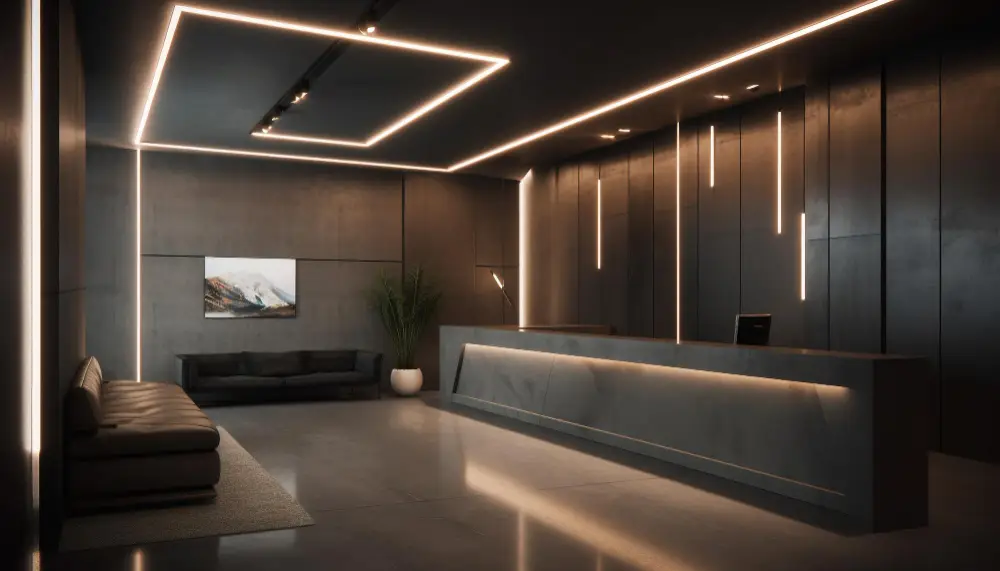
The lobby is the first space a guest actually experiences after check-in. It sets the expectation for everything that follows. Hotel owners and operators have long understood that lobby design matters, but the conversation has shifted from aesthetics alone to how specific materials and systems shape how guests feel and behave in that space.
Flooring and lighting are the two elements with the most influence on that experience, and both sit at the center of most public space renovation scopes.
The Lobby as a Signal
Before a guest forms a conscious opinion about a hotel, they have already absorbed information from the lobby environment. The brightness of the space, the texture underfoot, the color temperature of the light overhead: these things register before any deliberate evaluation happens. That is not metaphor. It is how sensory perception works.
This is why flooring and lighting decisions in a lobby renovation are not just design choices. They are functional ones that affect dwell time, perceived cleanliness, noise levels, and how comfortable guests feel in the space.
Flooring Choices & What They Communicate
Hard Surface Flooring
Large-format porcelain tile has become one of the most common choices for hotel lobby flooring. It is durable, easy to maintain, and available in finishes that replicate stone, wood, and concrete at a fraction of the cost of the natural materials. In high-traffic areas, grout joint size matters both for maintenance and for the visual effect the floor creates.
Polished concrete is another material that has gained traction in select-service and lifestyle hotels. It reads as modern and low-maintenance, and it works well in lobbies where the design leans toward an open or minimalist direction.
Natural stone, marble in particular, carries associations with quality and care that are hard to replicate with manufactured materials. The tradeoff is cost, porosity management, and the ongoing maintenance required to keep it looking as intended.
The finish of the flooring material also affects how light behaves in the space. Polished surfaces reflect ambient and artificial light and can make a lobby feel larger and brighter. Matte or honed finishes absorb more light and create a warmer, more grounded feel.
Area Rugs & Soft Zones
Hard flooring throughout an entire lobby creates acoustic and experiential problems. Sound bounces off hard surfaces and creates an environment that feels loud and less personal. Area rugs define zones within the lobby, reduce reflected noise, and introduce texture and warmth that hard surfaces alone cannot provide.
In renovation planning, the placement of rugs is often tied to furniture groupings and circulation paths. Getting this right means thinking about how guests move through the space and where they are likely to stop, sit, or wait.
Lighting & Guest Perception
Color Temperature
Color temperature, measured in Kelvins, has a direct effect on how a space feels. Lower color temperatures in the range of 2700K to 3000K produce a warm light associated with comfort and relaxation. Higher color temperatures, 4000K and above, produce a cooler, more alert-feeling light that works better in task-oriented environments.
Hotel lobbies generally benefit from warmer color temperatures in seating and lounge areas and slightly cooler options at the front desk and working surfaces. Mixing temperatures across different zones creates a lobby that serves multiple purposes without feeling inconsistent.
Layered Lighting Design
Good lobby lighting is never a single system. It is a combination of ambient light, which fills the overall space; task light, which supports specific activities like check-in; and accent light, which draws attention to architectural features, artwork, or finishes.
Pendant fixtures and chandeliers serve an ambient function while also acting as visual anchors that give the space a sense of scale and identity. Wall sconces and cove lighting add dimension. Recessed accent lighting highlights materials and focal points.
LED technology has made it easier to achieve this kind of layered design while maintaining energy efficiency. Dimming capability across all fixture types allows the same lobby to feel different at noon and at ten in the evening, which matters for properties that want the space to function as a lounge or social area after hours.
How Flooring & Lighting Work Together
The relationship between these two elements is direct. Dark flooring materials absorb light and require more fixture output to achieve the same perceived brightness as lighter floors. Reflective surfaces can create glare problems if the lighting layout does not account for them.
During renovation planning, decisions about flooring and lighting should happen together, not in sequence. A lighting layout designed around a lighter floor will behave differently if the flooring specification changes late. Material samples viewed under the planned light source, not just in a showroom, give a far more accurate picture of the finished result.
Material Durability vs. Design Intent
Hotel lobbies experience high foot traffic, rolling luggage, frequent cleaning, and occasional spills. Design decisions need to hold up to daily use without requiring constant repair or replacement.
Porcelain tile and sealed concrete fare well under these conditions. Natural stone requires more attention. Area rugs in commercial grades with appropriate backing and fiber content can last considerably longer than residential-grade products in the same application.
When specifying materials for a public space renovation, maintenance requirements and lifecycle cost should be part of the decision alongside appearance.
Renovation Considerations for Public Spaces
Lobby renovations often happen while the hotel remains open, which means phasing, dust control, and minimizing disruption to the front desk operation are all part of the project logistics. Material selections that allow for dry installation, such as click-lock systems or large-format tiles with minimal adhesive cure time, can reduce the window in which a section of the lobby is out of service.
The investment in getting the lobby right pays back in guest perception from day one. It is the space guests see first and last, and the materials chosen there tell a story about the property before a single word is exchanged at the desk.