

Most hotel owners think about AI in one way. Chatbots at the front desk. Dynamic pricing tools. Booking engines that learn from guest behavior. And yes, all of that is real and useful.
But here is what almost nobody is talking about yet: AI is also changing how hotels get built and renovated. Not after construction is done. During it. Before it even starts.
If you are planning a hotel renovation in 2026, or hiring a contractor to manage one, this is the most important thing you need to understand. The contractors and construction firms using AI today are finishing projects faster, spending less money, and causing fewer disruptions to hotel guests.
The ones not using it are still running projects the old way. And the difference is showing up in real numbers.
This article covers what is actually happening on hotel construction and renovation sites today, where AI is making a real difference, and what it means for you as a hotel owner or property manager.
First, Let Us Be Clear About What AI in Construction Actually Means
AI in hotel construction does not mean robots are swinging hammers. It does not mean fully automated job sites where machines do everything. That is the movie version, not the real version.
In practice, AI in construction means smart software tools that help human workers plan better, track progress more accurately, catch problems earlier, and make faster decisions. It means cameras and sensors on job sites that can spot a safety issue before someone gets hurt. It means scheduling software that can predict a delay two weeks before it happens. It means design tools that can generate 50 layout options in the time it used to take to draw one.
According to a 2026 survey of more than 400 hotel decision-makers, 61 percent of hoteliers said they want to see AI play a larger role in construction planning, including help with permitting and zoning. That number tells you how much owners already sense that something needs to change in how renovations are managed.
AI is filling that gap. And it is doing it in four specific stages of a hotel renovation project.
Stage 1: The Design Phase (Before a Single Wall Is Touched)
The design phase of a hotel renovation used to work like this. An architect would draft a plan. The owner would review it. Changes would be requested. A new draft would come back weeks later. This back-and-forth could go on for months, costing time and money before a single worker showed up on site.
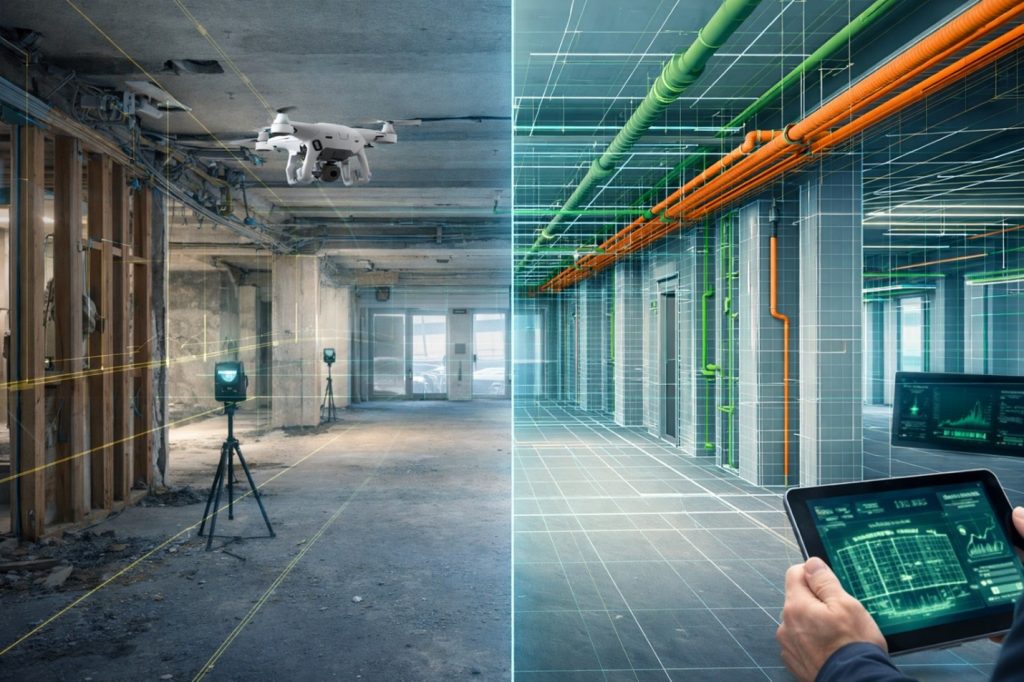
AI design tools have changed this dramatically. Modern AI-assisted design software can generate dozens of design variations in hours, not weeks. Each variation can be evaluated automatically for energy efficiency, material cost, code compliance, and how well it fits brand standards.
For a hotel owner renovating 150 rooms, this matters enormously. Instead of seeing one proposed layout and hoping it works, you can compare ten different approaches side by side with cost estimates attached to each one. You can see which layout uses the least material, which one finishes fastest, and which one will give you the highest return on the renovation investment.
AI is also being used to check brand standard compliance during the design phase. If you are renovating a Courtyard by Marriott or a Hilton Garden Inn, your renovation needs to meet specific brand requirements. AI tools can flag any design element that does not meet those standards before construction begins, which prevents expensive rework later.
Stage 2: Pre-Construction Planning (Where Most Renovation Projects Go Wrong)
Here is a fact that every hotel owner should know. Most renovation delays do not happen during construction. They happen because of poor planning before construction starts.
A contractor schedules a flooring crew to arrive on Tuesday. But the room prep was not finished Monday because another crew ran behind. Now the flooring crew has nothing to do. They leave. They get booked on another job. Getting them back adds two weeks to the project. The hotel owner loses revenue on rooms that sit empty longer than expected.
This kind of scheduling failure is one of the most common and most costly problems in hotel renovation. And it is exactly the kind of problem that AI planning tools are designed to prevent.
AI scheduling tools analyze historical data from hundreds of previous construction projects. They look at how long similar tasks actually took, not just how long they were estimated to take. They factor in trade availability, material lead times, permit approval timelines, and seasonal factors. Then they build a schedule that is grounded in reality rather than optimism.
More importantly, these tools keep updating the schedule as the project progresses. If something is running behind on day three, the AI system can immediately recalculate the impact on every downstream task and suggest adjustments before a small delay turns into a major one.
For occupied hotel renovations, where guests are sleeping 50 feet from an active construction zone, this level of scheduling precision is not a luxury. It is a necessity.
Stage 3: Active Construction (AI on the Job Site)
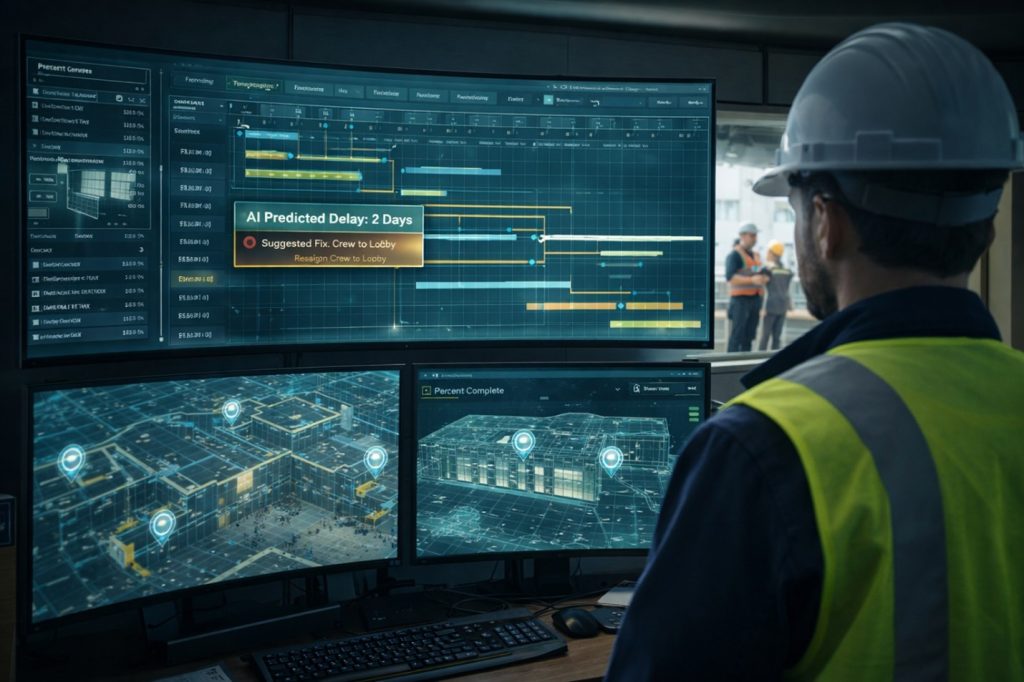
This is where AI gets most interesting for hotel renovation, and where competitors who write about AI in hospitality almost never go. They talk about chatbots and pricing. They do not talk about what is happening on construction floors.
Real-Time Progress Tracking
One of the most powerful applications of AI in active construction is progress tracking. Construction firms using AI-powered cameras and sensors can track exactly where work stands on any given day. These systems compare what is actually built against what the plan says should be built, and they flag gaps automatically.
In one documented example, a construction company using an AI platform called Buildots saw task completion increase by 230 percent on a project, identified delays before they became critical, and reduced reporting time by 70 percent. That last number matters for hotel owners too, because it means faster, more accurate updates on where your renovation actually stands.
Safety Monitoring in Occupied Hotels
Renovating a hotel while guests are still staying in it is one of the most complex construction scenarios that exists. You have noise restrictions. You have dust control requirements. You have workers moving through corridors that guests are also using. You have fire safety systems that need to stay operational at all times.
AI-powered monitoring systems help manage all of this. Computer vision cameras can detect when dust levels are rising in a corridor near guest rooms and alert the site manager immediately. Sensors can monitor noise levels and flag when work is approaching the limits set by the hotel’s operational agreements. Access control systems can track which workers are on which floors and make sure no one enters restricted areas.
The result is that hotels can continue operating with less disruption to guests, which protects reviews and revenue while the renovation is underway.
Quality Control
AI tools are also being used for quality inspections during renovation. Instead of waiting for a final walkthrough to catch problems, AI image recognition software can review photos taken during work and flag issues that need attention. A tile that is slightly out of alignment. A paint finish that does not match the specification. A door frame that is not square.
Catching these things during construction, not after, saves the time and cost of rework. It also helps contractors maintain the brand standard compliance that hotel flags require.
Stage 4: After the Renovation Is Done
A smart hotel renovation does not just install new furniture and fresh paint. It also installs the infrastructure that allows AI to keep working for the property for years after construction is complete.
Building Automation Systems, which are connected networks of sensors and controls that manage heating, cooling, lighting, and other building systems, are now increasingly AI-powered. These systems learn patterns over time. They know that on Tuesday mornings, checkout happens early and rooms need to be cooled down fast. They know that the north-facing rooms lose heat faster in winter. They adjust automatically, without any manual input from staff.
The energy savings are significant. According to industry data, AI-led building management systems can cut energy waste by 30 percent or more. For a 200-room hotel spending several hundred thousand dollars a year on energy, that is a meaningful reduction in operating costs every single year.
AI also powers predictive maintenance after renovation. Sensors in HVAC systems, elevators, plumbing, and electrical systems can detect subtle changes that indicate a component is starting to fail. A bearing running slightly hotter than normal. A pump drawing more current than it should. The system alerts maintenance staff before the equipment breaks down, which prevents the emergency repairs that are always more expensive and disruptive than planned maintenance.
What the Numbers Actually Look Like
It is easy to talk about AI in vague terms. Better, faster, smarter. But hotel owners make decisions based on numbers, so here is what the data actually shows.
Construction firms using AI project management tools are reporting 15 to 25 percent reductions in project delays. They are seeing 20 to 35 percent improvements in overall productivity. Safety incidents are dropping by 25 to 40 percent on AI-monitored job sites.
For hotel renovation specifically, the lodging construction and renovation market is growing at 10.2 percent annually and is expected to reach 720 billion dollars in 2026. One of the key drivers of that growth, according to market research, is the expansion of AI-assisted project management and connected building systems.
From the hotel operations side, the data is equally compelling. A major survey conducted in early 2026 among more than 400 hospitality technology decision-makers found that 82 percent of hotel properties expect to accelerate their AI usage over the next 12 months. Among those already using AI tools, the reported outcomes include time savings for teams, higher guest satisfaction, and stronger revenue from ancillary services.
And according to the BCG and NYU research published in 2026, AI-first hotels are already demonstrating measurable gains across costs, revenue, productivity, and guest experience compared to properties that have not adopted AI tools.
What Hotel Owners Should Look for in a Renovation Contractor
Understanding that AI is changing hotel construction is useful. But what you actually need to know is how to make sure your next renovation benefits from it.
When you are evaluating renovation contractors, these are the questions worth asking.
Ask what project management tools they use. A contractor still running projects entirely on spreadsheets and phone calls is working the same way contractors worked 20 years ago. Look for contractors using digital project management platforms that give you real-time visibility into where your project stands.
Ask how they manage occupied hotel renovations specifically. This is a specialized skill set that requires careful planning, strong communication, and active monitoring. Ask for examples of previous occupied hotel projects they have completed and what systems they used to manage guest impact.
Ask how they handle schedule delays. Every renovation project will face some unexpected issue. The question is not whether problems will arise, but how quickly they are identified and resolved. Contractors using AI-assisted scheduling can identify a developing delay days before it becomes critical. Contractors running manual schedules often do not notice until the delay has already happened.
Ask about their reporting process. You should receive regular, accurate updates on your project without having to chase them down. A contractor using modern project tracking tools should be able to give you a clear picture of progress, upcoming milestones, and any risks on the horizon.
The Mistakes Hotel Owners Make When Thinking About AI and Renovation
There are three common mistakes we see hotel owners make when the topic of AI and renovation comes up.
Thinking AI Is Only for Operations, Not Construction
Most of the coverage of AI in hospitality focuses on guest-facing tools. Chatbots, dynamic pricing, personalized recommendations. These are all real and valuable. But the renovation phase is where AI can have the biggest single impact on your budget and timeline. A renovation that runs two weeks over schedule can cost a hotel owner more in lost room revenue than a year’s worth of pricing optimization gains.
Waiting Until After Construction to Think About Technology Infrastructure
The time to plan for AI-powered building systems is during the renovation, not after. Running new conduit, installing sensor networks, and upgrading network infrastructure is far cheaper when walls are already open. Retrofitting these systems after renovation is complete is expensive and disruptive. Smart hotel owners are treating renovation as an opportunity to build the physical foundation for AI-powered operations.
Assuming AI Tools Are Only for Large Hotel Companies
A common assumption is that AI-powered construction management is something only Marriott or Hilton can afford. That was true five years ago. It is not true today. The tools are more accessible and more affordable than ever. Independent hotel owners and regional hotel groups are using the same AI project management platforms that large chains use. The question is simply whether your contractor has adopted them.
The Renovation Side Is the Untold Story of AI in Hotels
When you read about AI in hotels, you almost always read about the same things. Smarter booking. Better guest communication. Automated check-in. These are real improvements and they matter.
But the part of the story that rarely gets told is what AI is doing on the construction and renovation side. That is where the money gets spent. A full hotel renovation can cost millions of dollars and take months to complete. Every delay costs money. Every rework costs money. Every day a room sits out of service waiting for a contractor who is behind schedule costs money.
AI tools that improve the planning, execution, and monitoring of hotel renovations are directly protecting and improving the return on one of the largest capital investments a hotel owner ever makes.
That is not a technology story. That is a business story. And it is one worth paying attention to.
Final Thoughts
AI is no longer a future trend in hotel construction and renovation. It is a present-day tool that is already being used on job sites, in planning rooms, and in the building systems of hotels that have recently gone through renovation.
The hotel owners who benefit most from it are the ones who understand it early. Not because they need to become technology experts themselves. But because understanding what AI-powered construction management looks like helps them ask the right questions when hiring a contractor, make better decisions about renovation scope and timing, and set realistic expectations about what a well-managed renovation project should deliver.
At Hotel Construction Services, we have spent over 18 years renovating hotels across the Northeast, including properties for Marriott, Hilton, IHG, and other major brands. We have seen firsthand how better planning tools, better monitoring, and better communication change the outcome of a renovation project.
If you are planning a renovation and want to understand what a well-organized, properly tracked project looks like from start to finish, we are happy to walk you through it. Reach out to our team and let us talk through what your property needs.
Ready to start your next hotel renovation project?
Contact Hotel Construction Services today. Call us at 888-427-7174 or email Info@hcshotelreno.com. Our team serves hotel owners across Connecticut, New York, New Jersey, Massachusetts, and Rhode Island.