
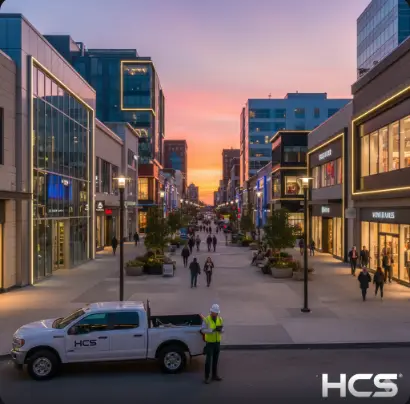
In the fast-paced world of commerce, a retail building is more than just four walls; it is a physical extension of a brand’s identity and a critical engine for revenue. From high-street luxury boutiques to massive suburban shopping centers, the construction requirements vary significantly based on foot traffic, logistics, and brand standards. For developers and retailers in the Northeast, navigating these different archetypes requires a construction partner who understands both the aesthetic and the structural nuances of the retail landscape. At HCS, we specialize in high-performance retail environments that turn window shoppers into loyal customers.
-
High Street and Luxury Boutiques
Located in premier urban corridors like New York City’s Fifth Avenue or Boston’s Newbury Street, high-street retail is about Brand Immersion.
- Ultra Premium Finishes: These projects demand high-precision craftsmanship custom stonework, museum quality lighting, and bespoke millwork that reflects a luxury identity.
- Complex Structural Fit-Outs: Often located within historic buildings, these projects require reinforcing aging structures to support modern glass storefronts and heavy high-end fixtures.
- High Security Integration: Seamlessly blending advanced security systems, biometric access, and reinforced display cases into the architectural fabric without compromising the aesthetic.
-
Big Box and Power Centers
These massive, standalone structures are the backbone of suburban retail, focusing on volume, durability, and logistical efficiency.
- Efficient Shell Construction: We prioritize long-span steel structures and tilt-up concrete panels to create vast, column-free interior spaces that offer maximum layout flexibility.
- Heavy-Duty Infrastructure: From reinforced concrete floors capable of supporting heavy forklift traffic to high capacity HVAC systems designed for large volume air exchange.
- Logistics and Loading: Designing and building specialized loading docks and rear access points that allow for constant inventory turnover without disrupting the customer experience at the front.
-
Shopping Malls and Mixed-Use Developments
Modern retail is shifting toward Lifestyle Centers where shopping, dining, and entertainment coexist in a single ecosystem.
- Common Area Integration: Construction of grand atriums, food halls, and outdoor plazas that require complex MEP (Mechanical, Electrical, Plumbing) coordination across multiple tenants.
- Tenant Improvement (TI) Coordination: We manage the delicate balance between the Base Building shell and individual tenant fit outs, ensuring that utility tap ins and fire safety systems are perfectly aligned.
- Unified Brand Storytelling: Using consistent materials and architectural motifs throughout the development to create a cohesive sense of place that encourages longer dwell times.
-
Pop Up Shops and Temporary Retail
The Flash Retail trend allows brands to test new markets or launch seasonal products with minimal long term risk.
- Speed to Market: These projects are built on ultra-compressed timelines, often moving from concept to opening in just a few weeks.
- Modular and Reusable Design: Utilizing prefabricated components and plug-and-play electrical systems that can be easily dismantled and moved to a new location.
- High-Impact Visuals: Focusing budget on the building’s “envelope” and signage to create maximum social media shareability and instant curb appeal.
-
Grocery and Supermarket Construction
Grocery retail is one of the most technically demanding sectors due to the intense mechanical and refrigeration requirements.
- Advanced Cold Chain Infrastructure: Installation of complex refrigerant piping and massive walk-in coolers that require 100% redundancy to prevent inventory loss.
- Sanitation-Grade Finishes: Utilizing non-porous, high durability materials that meet strict health department codes for food preparation and storage areas.
- High-Density MEP Systems: Integrating specialized plumbing for deli/bakery sections and high-load electrical for checkout islands and automated kiosks.
-
Flagship Stores: The Ultimate Brand Statement
A flagship is the North Star of a retail brand, designed to be a landmark destination rather than just a store.
- Experimental Architecture: Often featuring unique structural elements like cantilevered glass staircases, multi-story digital walls, and interactive experience zones.
- Future-Proof Technology: Integrating RFID tracking, smart mirrors, and frictionless checkout systems directly into the physical design.
- Turnkey Management: HCS provides end-to-end management, ensuring that the flagship becomes a physical manifestation of the brand’s global aspirations.
Conclusion: Building for the Modern Consumer
The retail landscape is constantly evolving, but the need for high-quality, resilient construction remains constant. Whether it is a luxury boutique or a high-volume supermarket, HCS ensures that the building is engineered to support the unique operational demands of the retailer while delivering an unforgettable experience for the customer.