
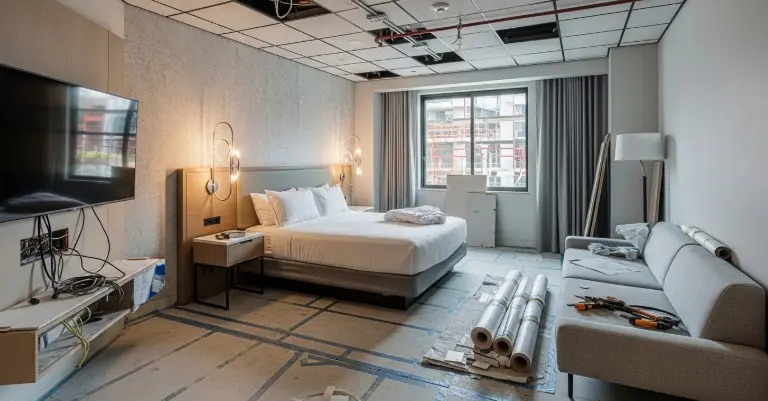
Introduction: Why FF&E matters in hotel construction decisions
In hotel development, construction is only half the equation. The real transformation from a structure into a revenue-generating hospitality asset happens through FF&E in construction, Furniture, Fixtures & Equipment.
For developers, investors, and hotel operators, FF&E directly influences guest experience, brand positioning, and operational readiness. It is also one of the most underestimated drivers of total hotel construction cost and opening timelines.
A hotel may be structurally complete, but without FF&E, it is not operational, not marketable, and not revenue-ready.
Quick Answer: What is FF&E in Construction? (For Hotel Developers & Investors)
FF&E in construction refers to all Furniture, Fixtures & Equipment required to make a building functional and usable.
In hotel projects, FF&E typically includes:
- Beds, sofas, chairs, tables
- Lighting fixtures and decorative elements
- Televisions, mini-fridges, and appliances
- Lobby furniture and reception setups
- Restaurant and banquet equipment
- Back-of-house operational equipment
Unlike structural elements, FF&E is movable and replaceable, yet essential for hotel operations.
What is FF&E in Construction? Role Explained in Hotel Development Projects
What is FF&E in Construction? Core Concept in Hospitality Projects
In hospitality infrastructure, FF&E bridges construction and operations. It converts architectural space into a fully functional guest environment.
FF&E supports:
- Guest room readiness and comfort
- Brand-aligned interior design execution
- Operational workflow efficiency
- Functional zoning of hotel spaces
Without FF&E planning during early hotel architecture planning, design and procurement often clash, causing delays and cost overruns.
Why FF&E is Critical in Hotel Construction & Hospitality Infrastructure
Hotels are experience-driven assets. Unlike residential or office buildings, revenue depends on how a space feels and functions on day one.
FF&E is critical because it:
- Defines guest perception of luxury and comfort
- Impacts reviews, occupancy rates, and pricing power
- Represents a major portion of pre-opening investment
- Influences operational efficiency and maintenance cycles
A poorly executed FF&E strategy can damage even a well-designed hotel building.
Scope of FF&E in Hotel Construction Projects
FF&E covers all operational and experiential elements, including:
- Guest room furniture (beds, wardrobes, desks)
- Lighting systems and lamps
- Bathroom mirrors and accessories
- Restaurant seating and kitchen equipment
- Lobby and lounge furnishings
- Outdoor resort furniture
- Back-of-house operational tools
In modern commercial construction for hotels, FF&E is treated as a parallel project stream alongside civil construction.
Key Factors Hotel Owners Must Understand About FF&E
Cost Impact on Hotel Construction Budget
FF&E typically accounts for 20%–35% of total hotel development cost, depending on hotel category.
- Budget hotels → standardized packages
- Mid-scale hotels → mixed customization
- Luxury hotels → fully bespoke FF&E programs
Poor FF&E planning is one of the main causes of hotel budget overruns.
Influence on Hotel Development Timeline
FF&E procurement often overlaps with finishing stages, but delays in manufacturing or shipping can:
- Push back hotel opening dates
- Delay soft opening and revenue generation
- Increase financing holding costs
Lead time planning is critical in hotel development timeline management.
Design & Branding Integration
FF&E defines the visual identity of the hotel.
It ensures:
- Consistency with hotel architecture planning
- Alignment with brand standards
- Differentiation in competitive hospitality markets
Luxury hotels often spend heavily on custom FF&E to create unique guest experiences.
Sustainability & Lifecycle Value
Modern hotel FF&E strategies also include sustainability goals:
- Durable materials reduce replacement cycles
- Eco-friendly sourcing supports LEED certification
- Energy-efficient appliances reduce operational cost
People Also Ask
What is FF&E in construction and why is it important in hotels?
It includes all movable items needed to operate a hotel and directly affects guest experience and revenue.
Does FF&E include appliances and electronics?
Yes, televisions, refrigerators, and similar operational devices are part of FF&E.
How much does FF&E cost in hotel construction?
Typically 20%–35% of total hotel development cost.
Who is responsible for FF&E procurement?
Usually developers, procurement teams, and interior designers.
Is FF&E included in construction contracts?
Sometimes, but often handled as a separate procurement package.
FF&E vs OS&E in Hotel Construction
| Category | Meaning | Examples | Role in Hotel |
|---|---|---|---|
| FF&E | Furniture, Fixtures & Equipment | Beds, lighting, TVs | Core operational setup |
| OS&E | Operating Supplies & Equipment | Linens, towels, utensils | Daily operations |
| Hard Costs | Physical construction | Structure, concrete, steel | Building creation |
| Soft Costs | Indirect expenses | Design, permits, legal | Planning & approvals |
Cost Breakdown: FF&E in Hotel Construction Budgets
Direct FF&E Costs
- Guest room furniture
- Lobby and restaurant setups
- Lighting and décor
- Electronics and appliances
- Custom interior elements
Indirect Costs
- Shipping and logistics
- Installation labor
- Import duties
- Storage and warehousing
Hotel Type Variations
- Budget hotels → standardized FF&E
- Luxury hotels → custom high-end materials
- Resorts → durable outdoor-focused FF&E
Common Mistakes Hotel Developers Make with FF&E
- Underestimating FF&E budget during early planning
- Ignoring lead times for custom furniture
- Prioritizing aesthetics over durability
- Poor coordination between procurement and design teams
- Misalignment with brand identity
These mistakes often lead to delayed openings and reduced ROI.
ROI & Investment Insights: Why FF&E Matters
FF&E directly impacts hotel profitability:
- Better guest experience → higher occupancy
- Strong design identity → higher room rates
- Durable assets → lower replacement costs
- Faster opening → earlier revenue generation
In hospitality investment, FF&E is not cost, it is revenue infrastructure.
Hotel Construction Considerations Influenced by FF&E
- Site type: urban vs resort FF&E requirements differ
- Design strategy: luxury hotels require bespoke interiors
- Construction method: modular hotels use standardized FF&E
- Sustainability: eco-friendly materials improve certifications
FAQs About FF&E in Construction
What is FF&E in construction?
Furniture, Fixtures & Equipment required for operational readiness.
Is FF&E part of hotel construction cost?
Yes, it is a major cost component of total development.
Can FF&E delay hotel opening?
Yes, procurement delays often impact timelines.
Is FF&E fixed or movable?
It is movable and replaceable.
Who designs FF&E in hotels?
Interior designers and hospitality consultants.
Does FF&E affect guest experience?
Yes, directly impacts comfort and perception.
Is FF&E different from OS&E?
Yes, OS&E covers consumable operational supplies.
Conclusion: Strategic Importance of FF&E in Hotel Development
FF&E is not just interior furnishing, it is the operational backbone of a hotel.
For developers and investors, it determines:
- Guest experience quality
- Brand positioning in the market
- Construction budget efficiency
- Speed of hotel opening and revenue start
A well-planned FF&E strategy transforms a completed building into a profitable hospitality asset ready for market success.