
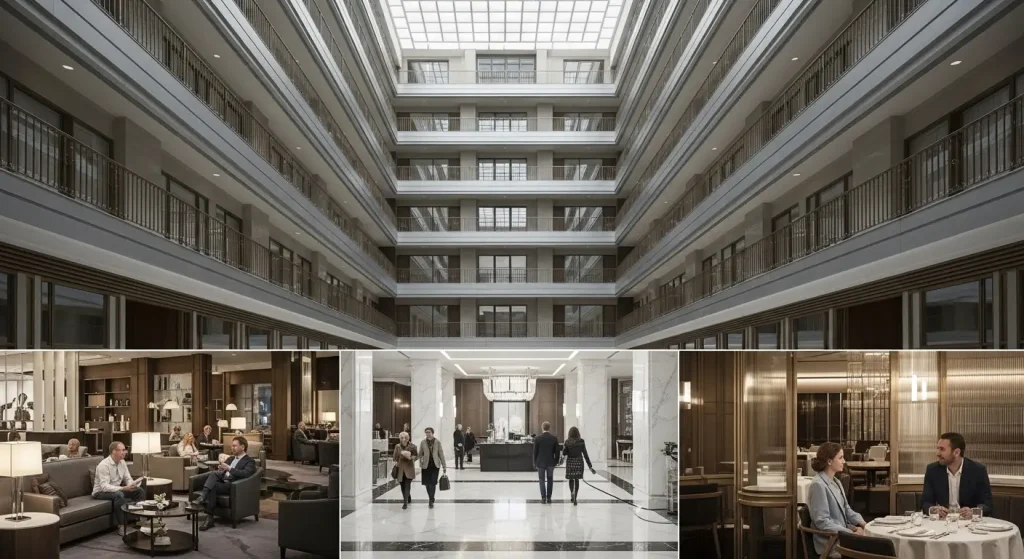
In the hospitality industry, time is revenue. Every day a hotel remains partially or fully closed during renovation means lost occupancy, reduced revenue, and potential damage to brand reputation. That’s why in 2026, more hotel owners are shifting toward a phased renovation strategy instead of complete shutdowns.
A phased hotel renovation allows property owners to upgrade rooms, amenities, and infrastructure in controlled stages while keeping the hotel operational. This approach is becoming especially important as demand for hospitality remains strong and competition continues to rise across both luxury and midscale segments.
This guide explains how phased hotel renovation works, its benefits, planning strategies, challenges, and best practices to ensure a smooth execution without disrupting guest experience.
- What Is Phased Hotel Renovation?
Phased hotel renovation is a construction strategy where a hotel is upgraded in sections or stages rather than shutting down the entire property.
Instead of renovating everything at once, the hotel is divided into:
- Floors
- Wings
- Room blocks
- Public areas (lobby, restaurant, spa)
Each section is renovated one at a time while the rest of the hotel continues operating normally.
This method allows hotels to:
- Maintain cash flow during construction
- Avoid full closure losses
- Gradually improve guest experience
- Why Phased Renovation Is Critical in 2026
In 2026, several industry trends are making phased renovation more important than ever:
- Rising Occupancy Demand
Hotels in tourist and business cities are experiencing steady demand, making full closure financially risky.
- High Construction Costs
Renovation costs per room have increased significantly, making revenue preservation essential during projects.
- Labor Shortages
Construction labor availability is inconsistent, making long continuous projects harder to manage.
- Brand Requirements (PIP Compliance)
Franchise hotels must meet Property Improvement Plan deadlines while still maintaining operations.
- Benefits of Phased Hotel Renovation
- Continuous Revenue Generation
Even during renovation, the hotel continues to generate income from unaffected rooms.
- Reduced Guest Disruption
Guests experience minimal disturbance when construction is isolated to specific zones.
- Better Cash Flow Management
Instead of a large upfront shutdown loss, costs and revenue are balanced over time.
- Flexibility in Execution
Owners can adjust renovation plans based on performance and budget availability.
- Improved Decision Making
Early phases provide real-time feedback that can refine later stages of renovation.
- How to Plan a Phased Hotel Renovation
Proper planning is the most important part of success.
Step 1: Conduct a Full Property Assessment
Evaluate:
- Structural condition
- MEP systems (Mechanical, Electrical, Plumbing)
- Guest experience pain points
- Brand compliance gaps
Step 2: Divide the Hotel Into Zones
Common segmentation:
- Guest room floors
- Lobby and reception
- Food & beverage outlets
- Back-of-house areas
Each zone should have a clear timeline and budget.
Step 3: Create a Master Schedule
A detailed schedule should include:
- Construction timelines per phase
- Occupancy projections
- Revenue expectations
- Seasonal adjustments
Step 4: Select the Right Contractors
Not all contractors are suited for phased renovation. You need teams that:
- Work in active environments
- Minimize noise and disruption
- Follow strict scheduling discipline
Step 5: Guest Experience Planning
Ensure guest comfort by:
- Isolating construction zones
- Providing alternative routes
- Offering compensation (upgrades, discounts)
- Common Challenges in Phased Renovation
- Noise and Guest Complaints
Even limited construction can impact guest satisfaction if not managed properly.
- Extended Project Timeline
Phased work naturally takes longer than full shutdown renovation.
- Cost Overlaps
Repeated mobilization of contractors can increase costs.
- Coordination Complexity
Multiple teams working in different areas require strong project management.
- Design Inconsistencies
Without proper planning, different phases may result in mismatched aesthetics.
- Best Practices for Successful Execution
- Start with Revenue-Generating Areas
Prioritize renovations that impact guest experience directly, such as:
- Rooms
- Bathrooms
- Lobby
- Use Real-Time Project Monitoring
Track:
- Budget usage
- Progress per phase
- Guest satisfaction scores
- Standardize Design Across Phases
Use consistent:
- Materials
- Color palettes
- Furniture styles
This avoids a “patched” look.
- Schedule Work During Low Occupancy Periods
Off-season renovation reduces:
- Guest disruption
- Revenue loss
- Operational stress
- Hire Dedicated Project Management Team
A strong project manager ensures:
- Coordination between contractors
- Timeline control
- Quality assurance
- Financial Impact of Phased Renovation
While phased renovation may seem slower, it often improves financial outcomes.
Example:
A 150-room hotel renovating fully:
- Full shutdown loss: $500,000–$1M revenue loss
Phased approach:
- Revenue retained: 60–80%
- Controlled cash flow
- Reduced financial risk
- ROI Advantages of Phased Renovation
Hotels using phased renovation often see:
- Increased ADR (10–30%)
- Improved occupancy rates
- Higher guest satisfaction scores
- Stronger brand positioning
The key advantage is that revenue continues during upgrades, which stabilizes ROI.
- Future of Phased Renovation in Hospitality
By 2026 and beyond, phased renovation will become the industry standard due to:
- Demand for Continuous Operations
Hotels cannot afford downtime in competitive markets.
- Sustainable Construction Practices
Phased upgrades align better with green building strategies.
- Smart Renovation Technology
AI-based scheduling and construction management tools will improve efficiency.
Conclusion
Phased hotel renovation is no longer just an alternative—it is a strategic necessity in modern hospitality construction. It allows hotel owners to balance revenue, guest satisfaction, and capital investment while upgrading properties in a structured way.
With proper planning, clear zoning, strong contractors, and disciplined execution, hotels can modernize without ever shutting their doors.
In a market where competition is increasing and guest expectations are evolving rapidly, phased renovation provides the perfect balance between growth and operational stability.