
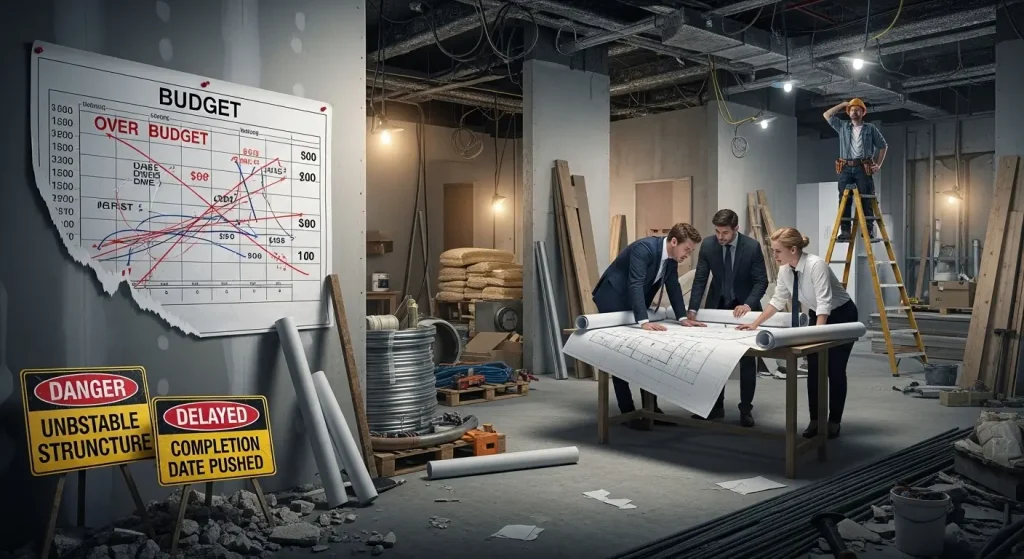
Hotel renovation projects are among the most complex types of commercial construction. Unlike standard building projects, hotels must remain operational, protect guest experience, and maintain revenue while upgrades are underway. This creates a unique challenge: balancing construction efficiency with business continuity.
In 2026, with rising construction costs, labor shortages, and stricter compliance requirements, even well-planned hotel renovations are at risk of budget overruns and project delays.
The good news is that most cost overruns are preventable.
This guide breaks down the most common hotel renovation mistakes and explains how property owners, developers, and operators can avoid financial losses while ensuring successful project delivery.
- Underestimating the True Renovation Scope
One of the biggest mistakes hotel owners make is underestimating how much work is actually required.
Why this happens:
- Surface-level inspections miss hidden structural issues
- Outdated mechanical systems are not properly evaluated
- Initial budgets focus only on visible upgrades
Hidden issues often include:
- Electrical system failures
- Plumbing deterioration
- HVAC system replacement needs
- Structural reinforcement requirements
Impact:
- Sudden budget increases mid-project
- Delays due to redesign and approvals
- Contractor change orders
How to avoid it:
Conduct a full pre-construction assessment, including:
- Structural engineering review
- MEP (Mechanical, Electrical, Plumbing) inspection
- Code compliance audit
- Material condition survey
A detailed scope study prevents surprises later in the project.
- Poor Budget Planning and Unrealistic Cost Estimates
Many hotel renovation projects fail financially due to inaccurate budgeting at the planning stage.
Common budgeting mistakes:
- Using outdated cost data
- Ignoring inflation and material price volatility
- Not including contingency funds
- Overlooking soft costs (design, permits, consulting)
What gets missed in budgets:
- 10–20% contingency reserve
- Permit and inspection fees
- Guest relocation costs (if partial shutdown occurs)
- Design and engineering fees
Impact:
- Mid-project funding gaps
- Scope reduction during execution
- Compromised quality standards
How to avoid it:
A realistic hotel renovation budget should include:
- Hard construction costs
- Soft costs (15–25%)
- Contingency buffer (10–20%)
- Operational disruption costs
Always plan for worst-case scenarios, not best-case assumptions.
- Changing Project Scope Midway
Scope changes during construction are one of the most expensive mistakes in hotel renovation.
Why it happens:
- Design decisions made too early without full clarity
- Stakeholders changing requirements mid-project
- Lack of finalized interior design plans
Consequences:
- Rework of completed areas
- Increased labor and material costs
- Extended project timelines
- Contractor change orders
How to avoid it:
- Finalize design before construction begins
- Use detailed 3D renderings and mockups
- Lock material selections early
- Establish a formal change-order approval process
Every mid-project change increase both cost and delay risk.
- Choosing the Wrong Contractors
Selecting the wrong contractor is one of the most critical and expensive mistakes in hotel renovation projects.
Common issues:
- Contractors without hospitality experience
- Poor coordination in occupied hotels
- Lack of scheduling discipline
- Weak quality control systems
Impact:
- Delays in phased renovation schedules
- Guest complaints due to disruption
- Poor workmanship requiring rework
How to avoid it:
Choose contractors with:
- Proven hotel renovation experience
- Experience working in live (occupied) environments
- Strong project management systems
- Clear communication structure
A specialized contractor reduces risk significantly compared to general construction firms.
- Ignoring Operational Continuity During Renovation
Hotels cannot function like standard construction sites. Guest experience must remain protected at all times.
Mistakes include:
- Poor noise control planning
- Inadequate dust management
- Construction blocking guest pathways
- Lack of communication with hotel staff
Impact:
- Negative online reviews
- Loss of repeat customers
- Brand reputation damage
How to avoid it:
- Implement phased renovation strategies
- Separate guest and construction zones
- Schedule noisy work during off-peak hours
- Provide clear signage and guest communication
Operational planning is just as important as construction planning.
- Ignoring Permits, Codes, and Compliance Requirements
Hotel renovations must comply with strict building codes, especially in fire safety, accessibility, and structural standards.
Common compliance issues:
- Missing fire safety upgrades
- ADA accessibility non-compliance
- Outdated electrical systems
- Incorrect permitting approvals
Impact:
- Project shutdowns by authorities
- Fines and legal penalties
- Forced redesign and rework
How to avoid it:
- Engage compliance consultants early
- Review local building codes before design finalization
- Conduct pre-inspection audits
- Maintain documentation for all approvals
Compliance should be integrated into the design phase, not treated as an afterthought.
- Poor Communication Between Stakeholders
Hotel renovation projects involve multiple stakeholders:
- Owners
- Architects
- Contractors
- Hotel management teams
- Engineers
Common communication failures:
- Misaligned expectations
- Delayed decision-making
- Lack of project reporting
- Unclear responsibilities
Impact:
- Coordination breakdowns
- Scheduling conflicts
- Cost inefficiencies
How to avoid it:
- Establish weekly progress meetings
- Use centralized project management tools
- Assign a dedicated project manager
- Maintain clear documentation of all decisions
Strong communication reduces both cost and timeline risks.
- Not Planning for Material Price Fluctuations
Construction material prices can change rapidly due to supply chain issues and inflation.
Common mistake:
- Locking budgets based on outdated pricing
Impact:
- Unexpected budget increases
- Procurement delays
- Material substitution issues
How to avoid it:
- Lock pricing contracts early
- Use bulk purchasing agreements
- Add inflation buffer in budget planning
- Source alternative material options in advance
- Over-Designing Instead of Focusing on ROI
Luxury design does not always equal financial return.
Common mistake:
- Over-investing in decorative elements that don’t improve revenue
Examples:
- Excessively expensive décor in low-tier hotels
- Custom designs that are hard to maintain
- Non-functional aesthetic upgrades
Impact:
- Poor ROI performance
- Increased maintenance costs
- Limited revenue impact
How to avoid it:
Focus on upgrades that improve:
- ADR (Average Daily Rate)
- Occupancy rates
- Guest experience ratings
Every design decision should support revenue growth.
- Lack of Contingency Planning
Unexpected issues are normal in renovation projects.
Common risks:
- Structural surprises
- Supply chain delays
- Weather disruptions
- Labor shortages
Impact:
- Project delays
- Increased costs
- Operational disruptions
How to avoid it:
- Include 10–20% contingency in budget
- Build flexible timelines
- Maintain backup suppliers
- Prepare phased execution plans
Contingency planning is not optional—it is essential.
Conclusion
Hotel renovation projects are high-value investments, but they come with significant risks if not managed properly. Most cost overruns are not caused by external factors—they result from poor planning, weak communication, and lack of detailed scope definition.
By avoiding these common mistakes, hotel owners can:
- Control renovation budgets
- Minimize operational disruptions
- Improve project timelines
- Maximize long-term ROI
In 2026’s competitive hospitality market, successful renovations are not just about upgrading properties—they are about executing them with precision, discipline, and financial control.