
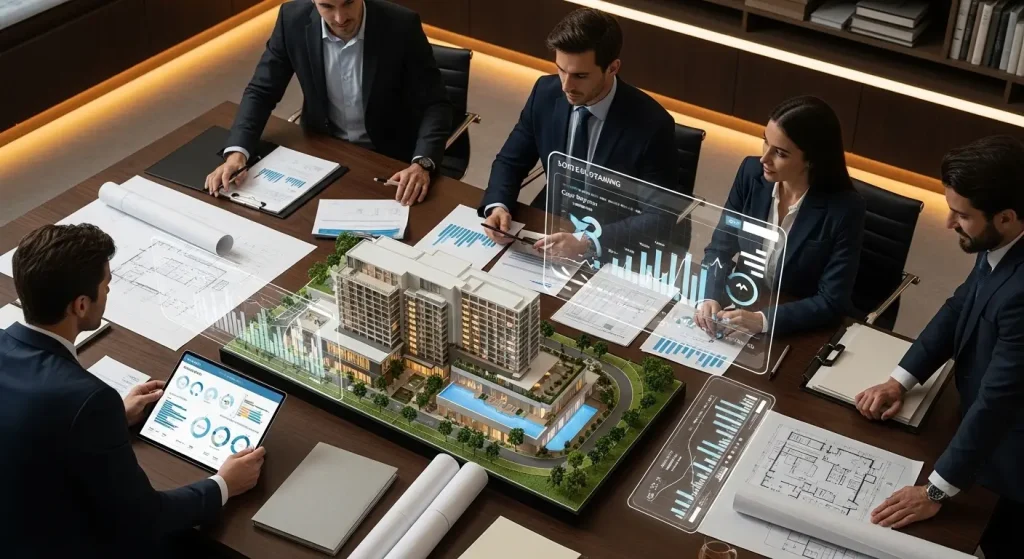
In the hotel industry, one of the most important financial disciplines is Capital Expenditure (CapEx) planning. Unlike operational expenses that cover day-to-day running costs, CapEx refers to long-term investments in property assets—such as renovations, system upgrades, and structural improvements.
In 2026, CapEx planning has become more critical than ever due to rising construction costs, increasing brand standards, aging hotel infrastructure, and evolving guest expectations.
For hotel owners and investors, poor CapEx planning leads to:
- Budget overruns
- Reduced asset value
- Lower ROI
- Franchise compliance risks
On the other hand, strategic CapEx planning can significantly increase:
- Property valuation
- Revenue per available room (RevPAR)
- Market competitiveness
- Long-term profitability
This guide explains how to build a strong hotel CapEx strategy that aligns financial planning with operational and investment goals.
- What Is Hotel CapEx?
Capital Expenditure (CapEx) in hotels refers to major investments in physical assets that improve the property’s value or extend its useful life.
Common CapEx examples:
- Guest room renovations
- Lobby redesigns
- HVAC system replacement
- Roof and structural repairs
- Elevator upgrades
- Furniture, fixtures, and equipment (FF&E) updates
- Technology and smart systems
Unlike maintenance costs, CapEx investments are:
- Long-term
- High-value
- Asset-enhancing
- Often required by brand standards
- Why CapEx Planning Is Critical in 2026
Several industry shifts are making CapEx planning more important:
- Rising Construction Costs
Material and labor costs continue to increase, making early financial planning essential.
- Franchise Property Improvement Plans (PIPs)
Hotel brands require periodic upgrades to maintain brand consistency and competitiveness.
- Investor Expectations
Investors now demand clearer ROI visibility before approving renovation budgets.
- Sustainability Requirements
Green building standards are increasing CapEx requirements for energy efficiency upgrades.
- Types of CapEx in Hotels
Understanding CapEx categories helps improve planning accuracy.
- Routine Replacement CapEx
- FF&E replacement cycles (beds, furniture, carpets)
- Minor renovations every 5–7 years
- Major Renovation CapEx
- Full room renovations
- Lobby and public area redesign
- Structural upgrades
- System Upgrade CapEx
- HVAC systems
- Plumbing and electrical upgrades
- Fire safety systems
- Technology CapEx
- Smart room systems
- Property management systems (PMS)
- Mobile check-in solutions
- How Much Should Hotels Budget for CapEx?
Industry benchmarks vary based on hotel category:
- Economy hotels: 3%–5% of annual revenue
- Midscale hotels: 4%–6% of annual revenue
- Upscale hotels: 5%–8% of annual revenue
- Luxury hotels: 6%–10% of annual revenue
Key insight:
Underfunding CapEx leads to asset deterioration and revenue decline over time.
- Common CapEx Planning Mistakes
- Ignoring Long-Term Planning Cycles
Many owners plan only 1–2 years ahead instead of 5–10 years.
- Treating CapEx as Optional Spending
CapEx is not optional—it is essential for asset preservation.
- Underestimating Renovation Costs
Initial estimates often ignore inflation and hidden costs.
- Poor Timing of Investments
Renovating too early or too late reduces ROI efficiency.
- Lack of ROI Analysis
Spending without financial return modeling leads to inefficient capital allocation.
- Strategic CapEx Planning Framework
A strong CapEx plan includes four key phases:
Step 1: Asset Condition Assessment
Evaluate the current state of the hotel:
- Physical condition of rooms and public spaces
- Mechanical system performance
- Brand compliance gaps
- Guest satisfaction data
This creates the foundation for planning.
Step 2: Financial Forecasting
Develop a 5–10 year CapEx forecast:
- Revenue projections
- Cost inflation estimates
- Renovation cycles
- Financing structure
This ensures financial alignment with long-term goals.
Step 3: Prioritization of Investments
Not all upgrades are equal. Prioritize based on:
- Revenue impact (ADR, occupancy increase)
- Operational necessity
- Guest experience improvement
- Compliance requirements
Step 4: ROI-Based Decision Making
Each CapEx project should answer:
- Will this increase revenue?
- Will this reduce operational costs?
- Will this improve brand positioning?
If the answer is no, the investment should be reconsidered.
- CapEx and ROI Relationship
CapEx is not just spending—it is capital transformation into revenue-generating assets.
Example:
A $3M renovation project may lead to:
- 15% increase in ADR
- 10% increase in occupancy
- Stronger brand rating
Result:
- Payback period: 3–5 years
- Long-term asset value increase
- Financing CapEx Projects
Hotels typically fund CapEx through:
- Cash Reserves
Best for smaller renovation cycles.
- Bank Loans
Used for large-scale renovations with strong revenue projections.
- Franchise Support Programs
Some brands offer renovation financing assistance.
- Investor Equity Contributions
Common in repositioning or distressed assets.
- How to Optimize CapEx Spending
- Align with Market Demand
Invest in upgrades that match guest expectations in your segment.
- Use Phased Renovation Strategy
Spread investments over time to reduce revenue disruption.
- Leverage Bulk Procurement
Reduce material costs through large-scale purchasing.
- Integrate Technology Early
Smart systems reduce long-term operational costs.
- Future of CapEx Planning in Hospitality
- Data-Driven Investment Decisions
AI and analytics will guide renovation timing and scope.
- Sustainability-Driven CapEx
Energy-efficient upgrades will become mandatory in many markets.
- Asset-Light Investment Strategies
Investors will focus more on ROI efficiency than physical expansion.
Conclusion
Hotel CapEx planning in 2026 is not just a financial exercise—it is a long-term asset management strategy. Successful hotel owners and investors treat CapEx as a structured roadmap for maintaining competitiveness, improving revenue, and increasing property value.
Without proper planning, CapEx becomes a cost burden. With strategic execution, it becomes a powerful tool for revenue growth and asset appreciation.
In today’s hospitality market, the difference between a struggling hotel and a high-performing one often comes down to one factor: