
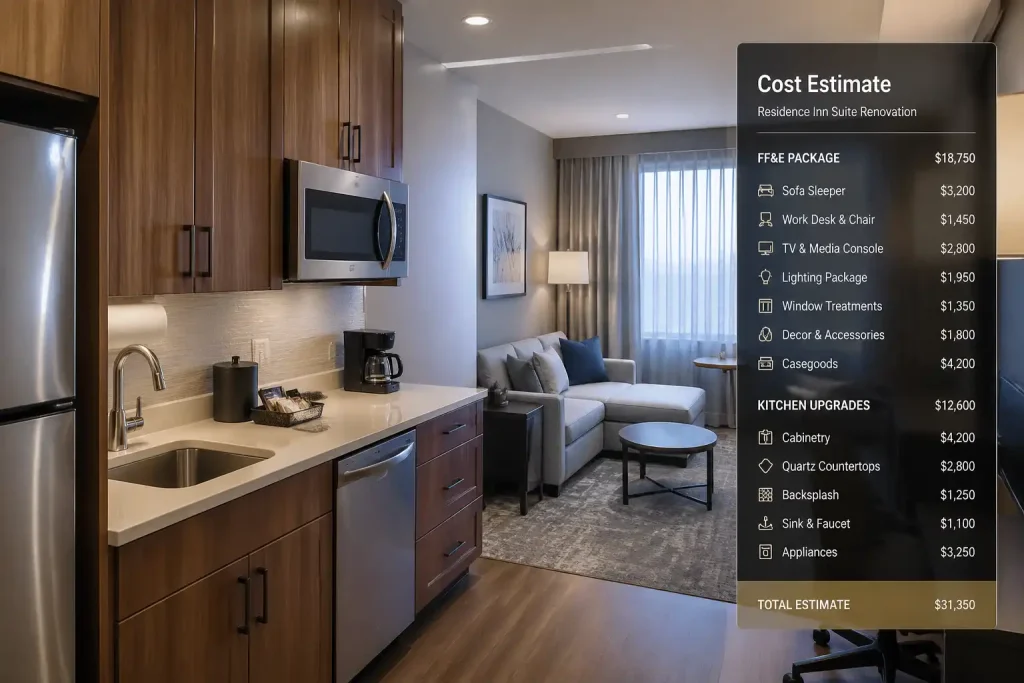
Residence Inn renovations follow different financial logic than typical hotel projects, and owners who plan them using standard select-service budget assumptions consistently underestimate the capital required. Suites run larger than guest rooms by a wide margin. Every key includes a kitchen module with cabinetry, countertops, appliances, and plumbing complexity that select-service properties never deal with. Public spaces accommodate longer stays, which means seating density, breakfast and evening reception zones, and outdoor amenity areas all carry extended-stay design overlays. Understanding where the budget actually goes is the first step toward a renovation plan that holds together from procurement through inspection.
Why Residence Inn Renovations Cost More Per Property
Residence Inn suites typically run between 390 and 525 square feet, compared to roughly 320 square feet for a standard select-service guest room. That additional thirty to forty percent of square footage means more flooring, more wall coverage, more lighting, and more case good footprint per key. In-suite kitchens add the largest single cost variable, with each suite carrying upper and lower cabinetry, countertop surfaces, a sink, a faucet, a refrigerator, a cooktop, a microwave, and small appliance accommodations. Bathrooms also run larger than the brand average, with more fixtures and more tile area than comparable Courtyard or Fairfield properties. Public spaces accommodate extended-stay guests using the space throughout the day, which expands seating capacity, work zones, and breakfast and evening reception infrastructure beyond what limited-service properties carry.
The Six Cost Centers in a Residence Inn Renovation
Mapping renovation budgets across six cost centers produces a clearer picture than the typical lump-sum approach. Each category carries different cost drivers, different lead times, and different risk profiles for budget overrun.
Guest Suite FF&E
Furniture, fixtures, and equipment for the suite includes the bed, the sleeper sofa, the dining and work area furniture, lighting, soft goods, and decor accessories. Per-suite ranges typically run six thousand to fourteen thousand dollars depending on the renovation tier and the brand-approved vendor specifications. Procurement lead times for case goods and custom upholstery typically fall between sixteen and twenty-four weeks, which makes early ordering essential for any project working against a fixed inspection deadline.
In-Suite Kitchen Modernization
Kitchen modules carry the largest per-suite cost variability. A cabinet refresh that retains existing boxes and replaces only doors and hardware typically costs three thousand to five thousand dollars per suite. A full cabinet replacement with new boxes, doors, and hardware runs seven thousand to twelve thousand dollars per suite. Countertop replacement, depending on the material chosen, runs another two thousand to four thousand five hundred dollars per suite. Appliance package upgrades, including refrigerator, cooktop, microwave, and dishwasher where applicable, run three thousand to six thousand dollars per suite. Sink and faucet hardware adds another six hundred to fourteen hundred dollars depending on the fixture grade.
Bathroom Renovation
Bathroom scope varies meaningfully across renovation tiers. A surface refresh including paint, lighting, and fixture replacement runs three thousand to five thousand dollars per suite. A vanity replacement with countertop and sink upgrade adds another two thousand five hundred to four thousand dollars. A full bathroom renovation including tile, plumbing relocation where needed, and fixture replacement runs nine thousand to fifteen thousand dollars per suite. Whether a bathroom remodel produces meaningful ADR uplift, which is increasingly the question owners want answered before committing capital, is covered in detail in the 2026 ROI analysis on bathroom remodels, and the answer for Residence Inn properties tends to be more favorable than for limited-service brands.
Public Space Renovation
Public space scope at Residence Inn properties typically includes the lobby, the gatehouse breakfast and evening reception area, the gym, and any outdoor amenity space. Lobby furniture refresh runs eighty-five thousand to one hundred eighty thousand dollars depending on property size. Gatehouse breakfast area renovation including buffet infrastructure, seating, and finishes runs one hundred twenty thousand to two hundred fifty thousand dollars. Outdoor amenity space renovation, when included in scope, runs sixty-five thousand to two hundred thousand dollars. Fitness center modernization runs forty-five thousand to ninety-five thousand dollars depending on equipment package and finish levels.
Corridor and Common Areas
Corridor renovation is the cost center most often underestimated at the budgeting stage. Carpet replacement runs roughly thirty-five to sixty-five dollars per linear foot. Combined carpet, paint, lighting, and signage updates run one hundred twenty to two hundred twenty dollars per linear foot. For a typical 130-suite Residence Inn with approximately 650 linear feet of corridor, full corridor renovation runs eighty thousand to one hundred forty thousand dollars. Properties skipping corridors during a major renovation often face brand inspection issues that require corridor work within twelve months anyway.
Building Systems and Mechanical
Mechanical scope rarely appears in early budget conversations but frequently surfaces during renovation. PTAC unit replacement runs eight hundred to fourteen hundred dollars per unit installed. Water heater capacity upgrades, electrical panel updates, and plumbing line replacements vary by property condition. Properties built more than twenty years ago carry meaningful risk of mechanical issues surfacing during demolition, and budgeting a contingency of seven to twelve percent against mechanical surprises has become standard practice for experienced operators.
Per-Suite Renovation Cost Tiers for 2026
The three-tier framework provides a starting point for budget conversations, with the understanding that property condition, regional cost factors, and brand-specific design package selections all swing the final number.
Tier One: Soft Goods Refresh
Soft goods refresh runs twelve thousand to eighteen thousand dollars per suite. The scope includes paint, drapery, bedding, lampshades, decor accessories, art replacement, and minor case good touch-ups. Carpet replacement falls inside this tier when the existing carpet is at end of useful life. Timelines for soft goods refresh typically run eight to twelve weeks for a 130-suite property executed in phased work to maintain occupancy. The framework for executing a five-day soft goods refresh without a shutdown applies particularly well to Residence Inn properties where extended-stay revenue makes shutdown economically painful.
Tier Two: Case Goods Plus Kitchen Refresh
Mid-tier renovation runs twenty-two thousand to thirty-five thousand dollars per suite. Scope adds case good replacement, headboard and bed frame upgrades, lighting fixture replacement, bathroom vanity updates, kitchen cabinet refresh with new doors and hardware, countertop replacement, and appliance package upgrades. Timelines run sixteen to twenty-two weeks for a 130-suite property executed in phased construction. This tier targets properties roughly six to nine years past their last full renovation, where soft goods alone will not meet brand standards but where structural building elements remain sound.
Tier Three: Full PIP Renovation
Full PIP renovation runs thirty-eight thousand to fifty-eight thousand dollars per suite. Scope includes complete suite overhaul with full kitchen replacement, bathroom gut renovation, floor-to-ceiling FF&E, lighting redesign, technology integration, and public space modernization. Timelines run twenty-eight to forty weeks for a 130-suite property executed in phased construction. This tier applies at the standard ten to fifteen-year refresh cycles or when properties trigger PIP renovation through ownership change or relicensing. The interconnection with brand standards across the Marriott portfolio, including the timing windows that make planning tractable, is detailed in the Marriott PIP requirements compliance guide that property owners working against a brand inspection deadline should review before finalizing scope.
Public Space Renovation Cost Ranges
Public space budgets layer on top of per-suite costs and frequently account for fifteen to twenty-five percent of total renovation investment. Mapping the cost across the typical Residence Inn footprint produces clearer planning numbers than the lump-sum estimates that early renovation conversations rely on.
Lobby refresh, including new furniture, lighting, decor, and minor finish updates, runs eighty-five thousand to one hundred eighty thousand dollars. Lobby renovation that adds flooring replacement, wall treatment changes, and front desk reconfiguration runs one hundred eighty thousand to three hundred thousand dollars. The Gatehouse, which includes the breakfast bar and evening reception area, runs one hundred twenty thousand to two hundred fifty thousand dollars for a refresh and three hundred thousand to four hundred fifty thousand dollars for a full renovation including buffet infrastructure replacement and finish overhaul.
Outdoor amenity space, where included, varies based on existing infrastructure. A courtyard refresh with new furniture, fire pit, and landscape touch-ups runs sixty-five thousand to one hundred thousand dollars. A full outdoor space renovation including sport court resurfacing, pergola installation, and full hardscape work runs one hundred fifty thousand to two hundred thousand dollars. Fitness center modernization runs forty-five thousand to ninety-five thousand dollars depending on equipment, flooring, and finish package.
Total Project Investment by Property Size
Combining per-suite costs with public space budgets produces total project ranges that align with what owners actually face when committing capital. The examples below assume full PIP renovation tier with standard public space scope.
A 100-suite Residence Inn full PIP renovation typically runs four and a half million to six and a half million dollars. A 130-suite property runs five and a half million to eight million dollars. A 150-suite property runs six and a half million to nine and a half million dollars. These ranges include FF&E, labor, demolition, install, and standard public space scope, but exclude major mechanical replacement, structural work, and any environmental remediation that surfaces during demolition.
Regional cost factors swing these numbers meaningfully. Northeast metropolitan markets, including Boston, New York, and Connecticut suburbs, run roughly fifteen to twenty-five percent above national averages for hospitality construction. Secondary markets and suburban properties run closer to national averages. Property condition swings totals further, with older properties carrying mechanical and structural surprises that newer properties avoid. Aligning the renovation budget with realistic CapEx planning per room benchmarks helps owners build the multi-year capital plan that supports both this renovation and the next one.
Realistic Timeline for Residence Inn Renovations
Timeline planning at Residence Inn properties carries an additional layer of complexity because of extended-stay guests. A standard hotel guest stays one or two nights and tolerates short-term renovation disruption. A Residence Inn guest stays five to seven nights on average, with corporate accounts often booking thirty-day stays. Disrupting these guests during construction has direct revenue and review-score consequences.
Soft goods refresh runs eight to twelve weeks for a 130-suite property executed in phased work. Case goods plus kitchen refresh runs sixteen to twenty-two weeks. Full PIP renovation runs twenty-eight to forty weeks. These timelines assume phased construction by floor or wing, with one floor under renovation while remaining floors continue selling rooms. Properties that attempt to renovate full floors simultaneously, or that compress timelines through expedited procurement, almost always exceed budget by fifteen to thirty percent. The detailed framework for phased hotel renovation without operational shutdown walks through the sequencing logic that keeps both revenue and brand standards intact through the construction period.
Where Owners Get Hidden Costs
The most expensive surprises during Residence Inn renovation are predictable, even though they are rarely budgeted. Kitchen plumbing and electrical updates beyond visible scope appear when older cabinets are removed and reveal water damage, code violations, or undersized electrical service to appliances. These surprises typically add eighteen hundred to three thousand five hundred dollars per suite when they occur, and they occur at roughly fifteen to thirty percent of suites in older properties.
Mold and moisture remediation behind older bathroom tile is another common surprise. Properties with grout failure or fixture leaks accumulate hidden moisture damage that becomes visible only after demolition begins. Remediation cost varies widely, from minimal cleanup at four hundred dollars per suite to full structural drying and material replacement at four thousand dollars or more per suite. The connection between water damage and renovation budgets, which most owners discover too late, is detailed in the analysis of water damage as the hidden renovation cost most owners miss, and Residence Inn properties carry above-average exposure because of in-suite kitchens with their own plumbing failure points.
ADA compliance gaps surface during renovation when properties built before current accessibility standards trigger compliance scope expansion. Common upgrades include door hardware replacement, bathroom fixture relocation, signage upgrades, and pathway modifications. Total ADA scope expansion for a 130-suite property typically runs forty thousand to eighty-five thousand dollars when triggered. The full inventory of hidden costs in hotel renovation projects provides a reference point for building contingency into Residence Inn renovation budgets at the planning stage rather than the panic stage.
Procurement Strategy That Saves Ten to Eighteen Percent
Procurement decisions made in the first sixty days of project planning shape whether the budget holds together. Owner-furnished items, where the property owner contracts directly with FF&E vendors, typically save eight to fourteen percent on material costs but require active project management. Contractor-furnished items simplify management but carry markup of twelve to twenty percent on materials. Multi-property ownership groups that source case goods and soft goods across multiple Residence Inn renovations capture volume discounts of ten to fifteen percent that single-property owners cannot access. Long lead time items, particularly kitchen cabinetry, custom millwork, and specialty lighting, require ordering at least four months ahead of installation. Properties that delay procurement decisions face expedited shipping premiums of fifteen to twenty-five percent and contractor schedule disruption that extends the project timeline.
Brand Approval Timing That Affects Cost
Brand approval gates appear at multiple points during renovation planning, and missing them produces design rework that inflates budgets meaningfully. Initial design package review typically runs four to eight weeks. FF&E specification approval runs another three to six weeks. Brand inspector pre-construction walkthrough adds two to four weeks. Total approval cycle time runs twelve to eighteen weeks when properly sequenced. Properties that submit incomplete design packages or skip the early scope alignment meeting frequently face approval cycles of twenty-four weeks or longer. The cost of late design rework runs anywhere from twenty thousand to one hundred fifty thousand dollars depending on the scope of changes required. Avoiding the common renovation mistakes that drive cost overruns requires treating brand approvals as a sequenced workflow rather than a series of isolated submissions.
Building the Renovation Budget That Holds Together
Residence Inn renovations reward owners who treat procurement and phasing as the strategic decisions they actually are. The capital allocation between guest suite work, kitchen modernization, public space renovation, and mechanical updates determines whether the property emerges as a competitive product in its market or carries renovation debt without operational uplift. Owners who plan twelve to eighteen months ahead of construction consistently complete projects on budget. Owners who treat renovation as a six-month sprint consistently exceed budget by fifteen to twenty percent.
If a Residence Inn renovation sits on your capital plan for 2026, walking through the full scope with a hospitality renovation team that has executed extended-stay projects across the Northeast clarifies the budget, the timeline, and the procurement sequencing before any commitment is made. Schedule a walkthrough through the contact page to discuss your property’s specific path forward.