
What Is Wellness-Focused Hotel Design
Wellness-focused hotel design is an approach to hospitality construction and renovation that prioritizes the physical and mental health of guests through deliberate decisions in architecture, materials, air systems, and lighting. It moves beyond aesthetics to address how a built environment affects how people feel, sleep, and recover. Over the past several years, this approach has shifted from a niche offering found only in destination resorts to a baseline expectation across hotel segments. Properties are now being designed and renovated with health outcomes as a primary design driver, not an afterthought. For hotel owners, this shift showcases both a guest expectation to meet and a revenue opportunity to capture through targeted capital investment.
Why Wellness Matters in Hotels
Guest expectations around health and comfort have changed in ways that are now reflected in booking behavior and review content. Travelers are more aware of indoor environments and more likely to factor air quality, noise levels, and sleep conditions into property selection. The period following 2020 accelerated this shift, with cleanliness, ventilation, and material safety moving from background concerns to front-of-mind priorities for a broad segment of travelers across all hotel categories.
For hotel owners, wellness design carries a measurable competitive advantage. Properties that invest in air quality, lighting, and guestroom comfort differentiate themselves in markets where room rates and amenities are otherwise similar. Wellness hospitality trends are also increasingly reflected in brand standards, with major flags incorporating healthy building requirements into property improvement plan criteria, which means wellness upgrades are becoming a compliance issue in addition to a guest experience one.
Spa & Relaxation Spaces
Dedicated Spa Areas
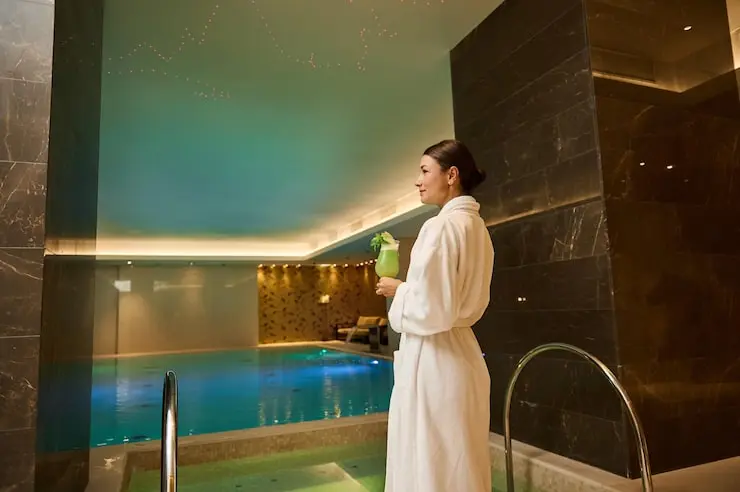
Spa design in hotels goes beyond a massage room and a sauna. Wellness hospitality trends favor dedicated spa suites with separate wet and dry areas, thermal experiences, and recovery zones that give guests access to relaxation spaces without requiring advance appointments. These areas require specific plumbing, ventilation, and acoustic design that must be planned during renovation rather than added after construction is complete. Attempting to retrofit spa infrastructure into a space that was not designed for it adds cost and produces results that rarely meet the standard guests expect from a wellness-positioned property.
Quiet Zones & Wellness Amenities
Quiet zones within hotels, areas designated for low-noise, low-stimulation rest, have grown in demand alongside spa facilities. These spaces may include meditation rooms, low-light lounges, or outdoor garden areas buffered from traffic and noise. Renovation projects that allocate underutilized square footage to wellness amenities often see stronger returns than those that convert the same space into additional guestrooms, because wellness amenities support both premium pricing and longer average stays.
Indoor Air Quality
Indoor air quality is one of the most impactful and most overlooked areas of wellness hotel design. Guests cannot see or measure air quality, but poor ventilation, elevated particulate levels, and off-gassing from building materials affect sleep, respiratory comfort, and overall perception of a stay in ways that show up consistently in review scores.
HVAC Systems & Filtration
Hotel HVAC systems designed to wellness standards operate at higher air exchange rates than code-minimum systems. MERV-13 or higher filtration, which captures fine particulate matter, allergens, and airborne contaminants, is a baseline specification in healthy building design. Some properties are adding HEPA filtration to guestroom units to deliver a higher level of air cleanliness at the room level. These upgrades require equipment replacement or supplementation during renovation and should be coordinated with the broader mechanical scope of any property improvement plan to avoid duplicate mobilization costs.
Fresh Air Circulation
Increased outdoor air introduction reduces carbon dioxide buildup in occupied spaces, which has a measurable effect on alertness and sleep quality. Demand-controlled ventilation systems adjust fresh air supply based on occupancy, balancing indoor air quality with energy consumption. In climates with extreme temperatures, energy recovery ventilation systems allow fresh air to be introduced without the full energy cost of conditioning unconditioned outdoor air, making the investment in air quality improvement more financially sustainable over the long term.
Lighting Design
Natural Light
Natural light is the most cost-effective wellness design tool available in hotel renovation. Guestrooms and public spaces with access to daylight reduce reliance on artificial lighting, support circadian rhythm regulation, and create a connection to the outdoor environment that guests respond to positively. Renovation projects that enlarge window openings or add skylights to underlit common areas deliver a lasting impact on guest experience at a one-time construction cost.
Circadian Lighting Systems
Circadian lighting systems adjust color temperature and intensity throughout the day to support the body’s natural sleep-wake cycle. Warmer, dimmer light in the evening hours signals the body to prepare for sleep, while brighter, cooler light in the morning supports alertness and energy. These systems are being specified in guestroom renovations at upper-midscale and above properties. The infrastructure investment includes tunable LED fixtures and control systems that can be programmed by room or managed through a building automation platform, and the guest response in review content consistently reflects the improvement in sleep quality that follows installation.
Materials & Finishes
Material selection in wellness hotel design prioritizes low-emission products that do not off-gas volatile organic compounds into occupied spaces. Paints, adhesives, flooring, and case goods all have emission profiles that affect indoor air quality over the full life of the installed product. Certification programs such as GREENGUARD provide a framework for identifying low-emission materials during the specification process, giving project teams a clear standard to specify and verify without relying solely on manufacturer claims.
Natural materials including wood, stone, and plant-based textiles contribute to a sensory environment that guests associate with calm and comfort. These materials also perform well in durability terms when selected and maintained appropriately, making them a sound long-term investment for renovation projects where both guest experience and life-cycle cost matter.
Wellness in Guestrooms
The guestroom is where wellness design decisions have the most direct impact on the guest. Air quality at the room level, controlled through in-room filtration or high-performance HVAC units, affects how guests sleep and how they feel upon waking. Lighting control that allows guests to adjust both brightness and color temperature supports rest on their own schedule. Acoustic performance through sound-rated wall assemblies, solid-core doors, and sound-absorbing floor finishes reduces noise transmission from corridors and adjacent rooms. These three elements, air, light, and sound, account for the majority of wellness-related guest complaints when poorly managed and the majority of positive wellness feedback when executed well.
Impact on Revenue
Properties that invest in wellness design see measurable improvements in review scores in the categories guests cite most frequently, including room comfort, sleep quality, and cleanliness. Higher review scores support stronger average daily rates and improve platform placement on booking channels that determine how many guests see the property during a search.
Wellness amenities also support longer average stays. Guests who use spa facilities, relaxation zones, and wellness programs tend to extend bookings beyond a standard one or two-night stay. Premium pricing for wellness-focused room categories, including rooms with in-room air purification, circadian lighting, or acoustic packages, is increasingly accepted by guests who prioritize health when making lodging decisions.
Implementation in Renovation
Wellness design upgrades are most cost-efficient when integrated into a renovation that is already replacing mechanical systems, finishes, and furnishings. HVAC replacement projects are the right moment to upgrade filtration and increase fresh air capacity. Finish and furniture replacement projects are the right moment to specify low-emission materials. Lighting renovation projects are the right moment to install tunable LED systems. Adding these elements outside of a planned renovation scope increases cost and disruption significantly. Owners planning a property improvement plan should identify which wellness upgrades can be layered into existing scope before the renovation design is finalized.