
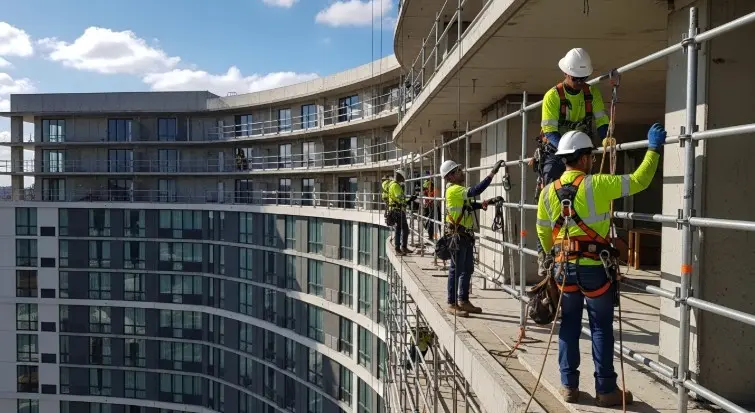
In hotel construction, where multi-story structures, complex façades, and dense work zones are standard, safety is not just a compliance checkbox, it is a financial and operational priority. One of the most critical safety components is fall protection.
For hotel developers and investors, understanding when fall protection is required in the construction industry directly impacts project risk, insurance exposure, timelines, and ultimately ROI. A single safety violation can halt construction, trigger penalties, and delay opening, costing thousands per day in lost revenue.
In modern commercial construction for hotels, fall protection is deeply integrated into the hospitality construction process, influencing everything from design decisions to contractor selection and execution strategy.
Quick Answer: When is Fall Protection Required in the Construction Industry? (For Hotel Developers & Investors)
Fall protection is required when workers are exposed to fall hazards at heights of 6 feet or more in commercial construction, including hotel development projects.
In hotel construction, this applies to:
- Structural framing and multi-story building work
- Roof installation and façade systems
- Elevator shafts, stairwells, balconies, and open edges
It directly affects:
- Worker safety compliance
- Hotel development timeline
- Insurance costs and liability risk
When is Fall Protection Required in the Construction Industry? Role Explained in Hotel Development Projects
Fall protection refers to systems designed to prevent workers from falling from elevated surfaces during construction activities.
In hotel projects, these include:
- Guardrails and edge protection systems
- Safety nets for high-rise work
- Personal fall arrest systems (PFAS)
- Controlled access zones for high-risk areas
These systems are essential in hotel building design and execution, especially in multi-level developments where vertical construction dominates.
Why Fall Protection Is Critical in Hotel Construction & Hospitality Infrastructure
Hotel construction involves repetitive vertical work across multiple trades, MEP, façade, interiors, which significantly increases fall risk.
Key reasons it’s critical:
- Multi-story buildings amplify exposure to height hazards
- High worker density increases accident probability
- Prevents costly project shutdowns due to incidents
- Ensures compliance with safety regulations
Without proper fall protection, even a single incident can derail the entire hotel development timeline.
Scope of Fall Protection in Hotel Construction Projects
Fall protection is required across multiple stages of the hospitality construction process:
- Structural framing and slab casting
- Roofing and waterproofing systems
- Curtain wall and façade installation
- Balcony and terrace construction
- Elevator shafts and stairwell openings
- Modular hotel construction assembly
Even in modular hotel construction, fall risks exist during on-site assembly and integration.
Key Factors Hotel Owners Must Understand About Fall Protection
Cost Impact on Hotel Construction Budget
Fall protection increases upfront costs through:
- Equipment (harnesses, guardrails, nets)
- Training and compliance systems
- Installation and maintenance
However, it significantly reduces:
- Legal liabilities
- Insurance premiums
- Accident-related delays
In reality, proper safety planning lowers the total hotel construction cost over the project lifecycle.
Influence on Hotel Development Timeline
Fall protection is tied directly to project speed:
- Work cannot proceed without safety compliance
- Failed inspections cause immediate delays
- Poor planning leads to rework and stoppages
Efficient safety integration ensures smoother execution and protects the critical path.
Design & Construction Planning Integration
Fall protection begins at the design stage:
- Architects incorporate edge protection strategies
- Engineers design safe access and structural anchors
- Impacts hotel architecture planning and sequencing
Ignoring safety during design creates expensive retrofits later.
Sustainability & Workforce Safety Culture
Modern hotel projects align safety with sustainability:
- Reduced accidents minimize material waste
- Supports ESG and responsible development goals
- Improves workforce productivity and retention
How Fall Protection Is Implemented in Hotel Construction Projects
Step 1: Site Risk Assessment & Safety Planning
Identify fall hazards such as open edges, shafts, and elevated work zones.
Step 2: Safety System Design & Selection
Choose appropriate systems like guardrails, PFAS, or safety nets based on project phase.
Step 3: Installation of Fall Protection Systems
Install edge protection, anchor points, and safety barriers across active zones.
Step 4: Worker Training & Compliance Enforcement
Train all workers and subcontractors on safety procedures and equipment use.
Step 5: Inspection, Monitoring & Adjustment
Conduct regular audits and adapt systems as construction progresses.
Fall Protection Systems in Hotel Construction
| System Type | Cost | Effectiveness | Best Use in Hotels |
|---|---|---|---|
| Guardrails | Medium | High | Floor edges, balconies |
| Safety Nets | Medium | High | High-rise construction |
| Harness Systems (PFAS) | Low-Medium | Very High | Roofing, façade work |
| Scaffolding Protection | Medium | High | Exterior façade installation |
Cost Breakdown: Fall Protection in Hotel Construction
Direct Cost Components
- Safety equipment procurement
- Installation labor
- Worker training programs
Indirect Cost Benefits
- Reduced accident-related delays
- Lower insurance costs
- Avoidance of penalties and litigation
Cost Variations by Hotel Type
- Budget hotels → basic systems
- Luxury hotels → advanced, high-rise safety solutions
- Resorts → moderate complexity
Real-World Example
Consider a 12-story urban hotel project:
During façade installation, lack of proper harness systems caused a minor accident, triggering a safety audit. The result:
- 10-day project shutdown
- Additional compliance costs
- Delay in interior finishing
After implementing a structured fall protection plan, the project resumed efficiently, highlighting how safety directly affects hotel development timeline and ROI.
Regulations, Permits & Compliance for Fall Protection
Safety Regulations
- Mandatory compliance with national safety standards (e.g., OSHA)
- Fall protection required at defined height thresholds
Building Code Integration
- Safety systems must align with structural design
- Required for inspection approvals
Environmental & Site Compliance
- Special measures for high-wind, coastal, or uneven terrain sites
Common Mistakes Hotel Developers Make with Fall Protection
- Ignoring safety during early planning
- Choosing low-cost, ineffective systems
- Lack of worker training
- Poor coordination across contractors
- Not updating safety measures as construction evolves
These mistakes often lead to delays, penalties, and increased costs.
ROI & Investment Insights: Why Fall Protection Matters
Reduced Financial Risk
Prevents lawsuits, penalties, and compensation claims.
Faster Project Completion
Fewer accidents mean fewer disruptions.
Improved Workforce Productivity
Safe environments increase efficiency and morale.
Hotel Construction Considerations Influenced by Fall Protection
Site Selection & Terrain Conditions
Urban and sloped sites increase fall risk complexity.
Design Strategy (Luxury vs Budget Hotels)
Luxury hotels with complex façades require advanced safety systems.
Construction Methods (Modular vs Traditional)
Modular construction reduces on-site risks but still requires safety planning.
Sustainability & Green Building Practices
Safer construction reduces waste and supports green initiatives.
Operational Efficiency Post-Construction
Proper safety planning ensures smoother project delivery and fewer liabilities.
FAQs About Fall Protection in Hotel Construction
When is fall protection required in the construction industry for hotels?
At heights of 6 feet or more during any construction activity.
What systems are used for fall protection in hotel construction?
Guardrails, safety nets, and personal fall arrest systems.
Does fall protection increase hotel construction cost?
Yes, but it significantly reduces long-term financial risks.
Who ensures fall protection compliance on-site?
General contractors and site safety managers.
Is fall protection required during modular hotel construction?
Yes, especially during on-site assembly.
What happens if fall protection is not used?
It can result in accidents, legal penalties, and project shutdowns.
How does fall protection impact hotel development timeline?
Proper planning speeds up approvals and reduces delays.
Is fall protection required for interior hotel work?
Yes, if workers are exposed to height risks like stairwells or shafts.
Conclusion: The Strategic Role of Fall Protection in Hotel Construction Success
Fall protection is not just a regulatory obligation, it is a core investment in project stability and profitability.
For hotel developers and investors, it ensures:
- Compliance with safety regulations
- Reduced project delays and liability risks
- Efficient execution of complex construction phases
A well-executed fall protection strategy directly contributes to lower hotel construction cost overruns, faster project delivery, and stronger ROI.
In modern hospitality development, safety is not an expense, it is a competitive advantage.